
Medicinal Herb Profile of Sage
Herb Overview
| Common Names: | Sage, Common Sage, Garden Sage, Broadleaf Sage |
| Botanical Name: | Salvia officinalis |
| Plant Family: | Lamiaceae |
| Origins: | Native to the Mediterranean region; widely cultivated in herb gardens worldwide |
| Parts Used: | Leaves, flowering tops |
| Primary Preparations: | Tea, tincture, glycerite, infused oil, salve, gargle, steam |
Plant Identification
Full Plant (in ground): 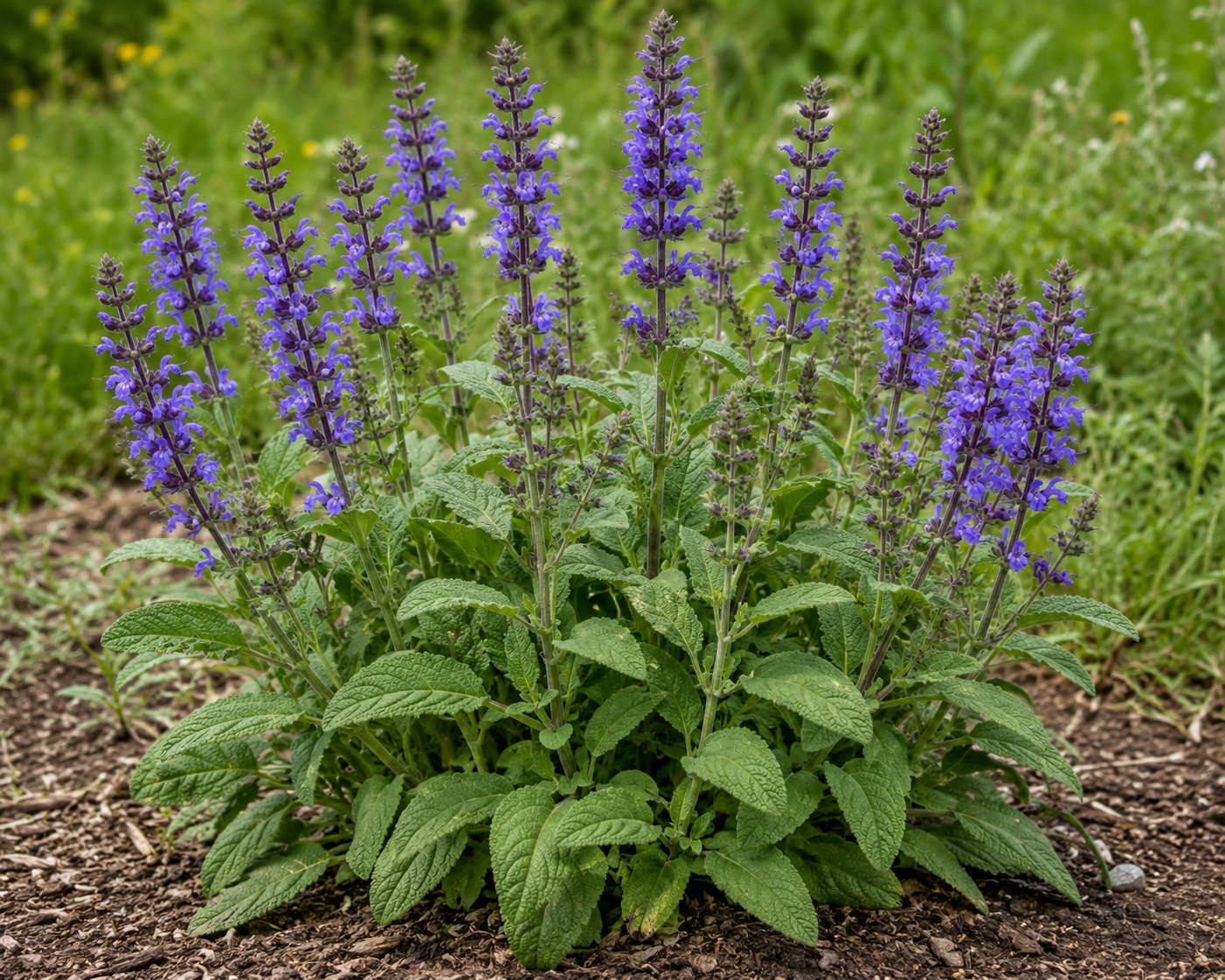
Small shrubby perennial herb with woody stems, soft gray-green leaves, and spikes of purple-blue flowers.
Leaves (mature): 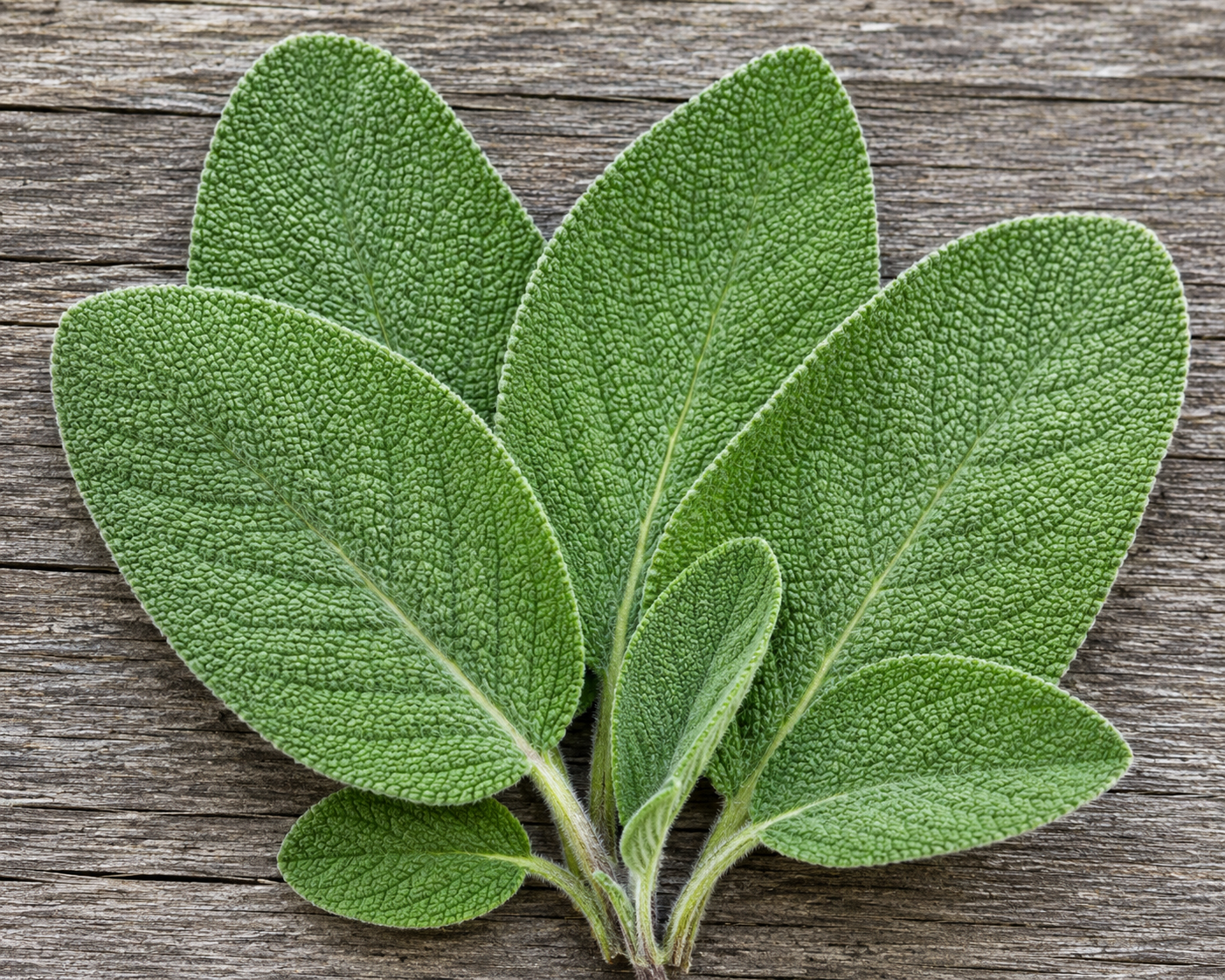
Oblong to oval leaves with a soft, velvety texture and gray-green coloring. Leaves are slightly wrinkled and strongly aromatic.
Leaves (early growth): 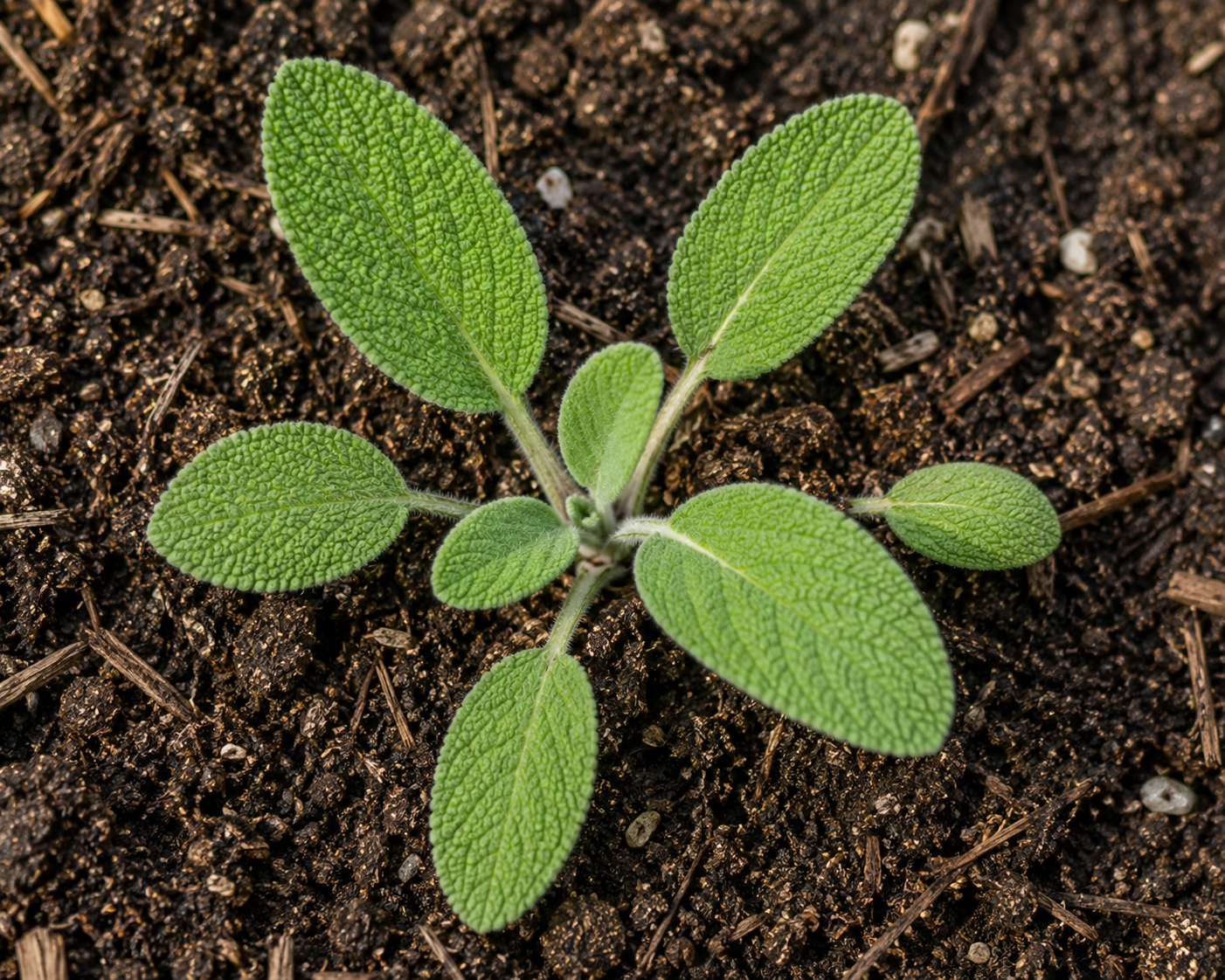
Young leaves are smaller, softer, and often lighter green or silvery in color.
Stem: 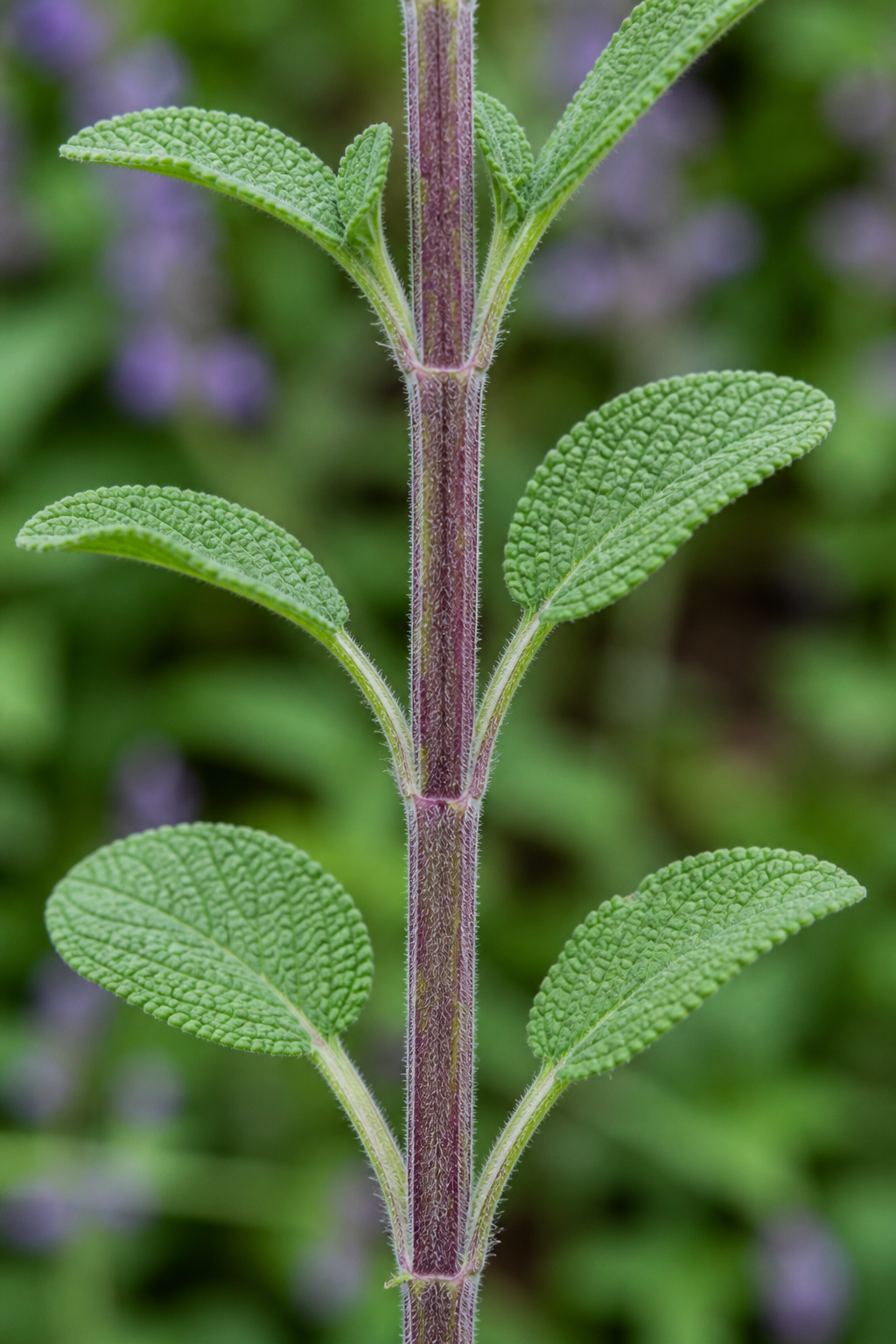
Square stems typical of the mint family; green when young and woody with age.
Flower (Top View): 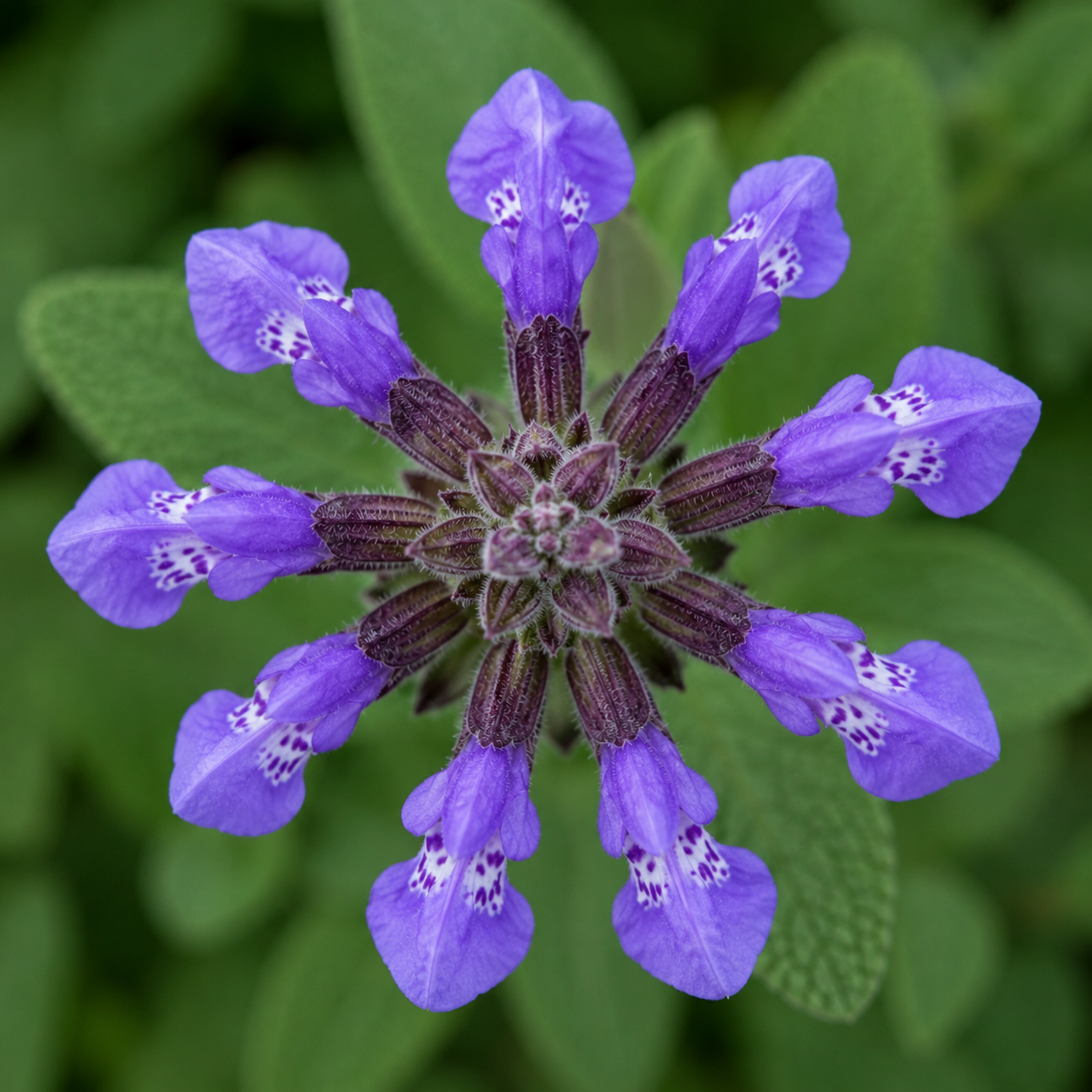
Small purple-blue flowers arranged in upright spikes above the foliage.
Flower (Side View): 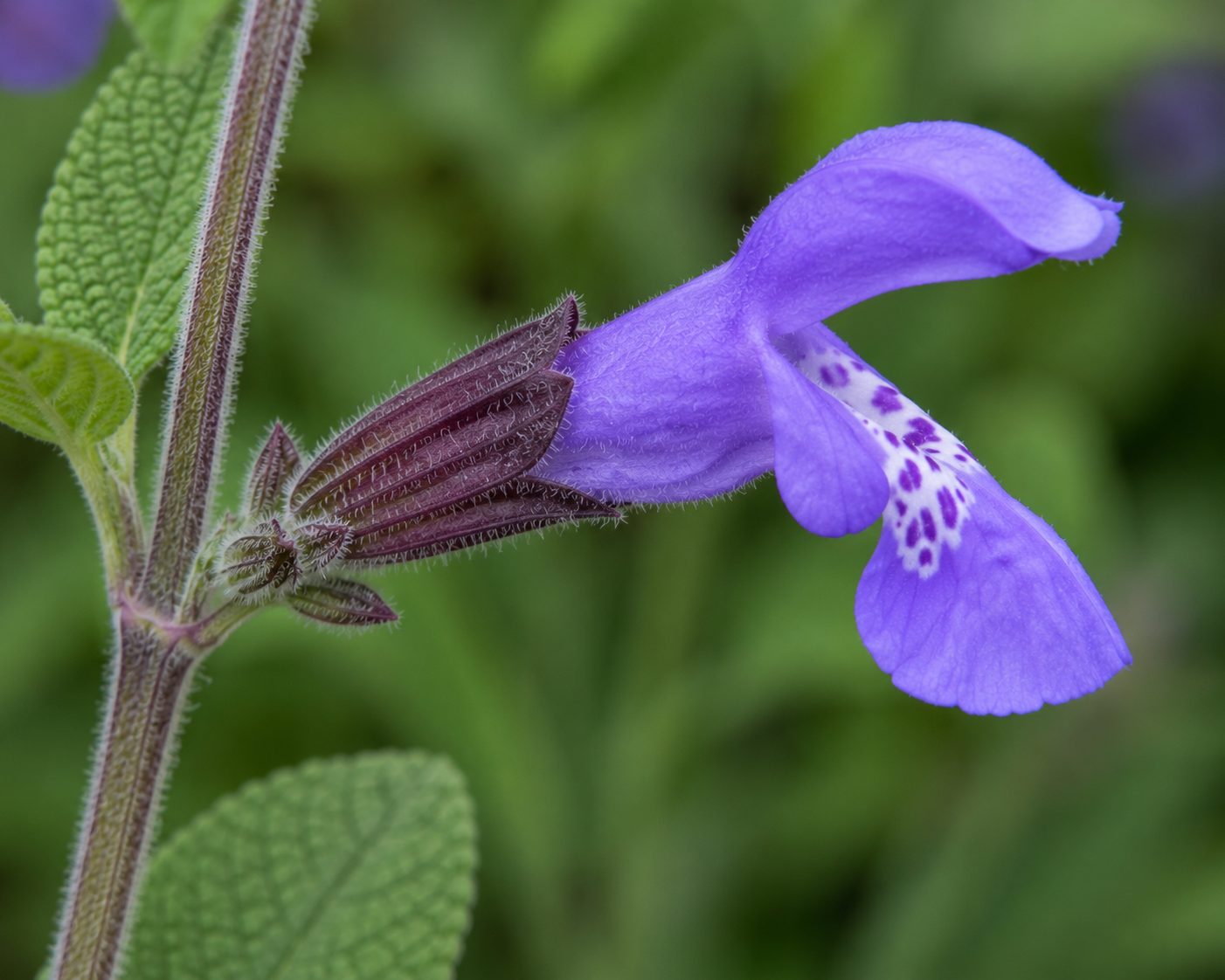
Tubular flowers emerging in whorls along tall flower spikes.
Flower Base (bracts):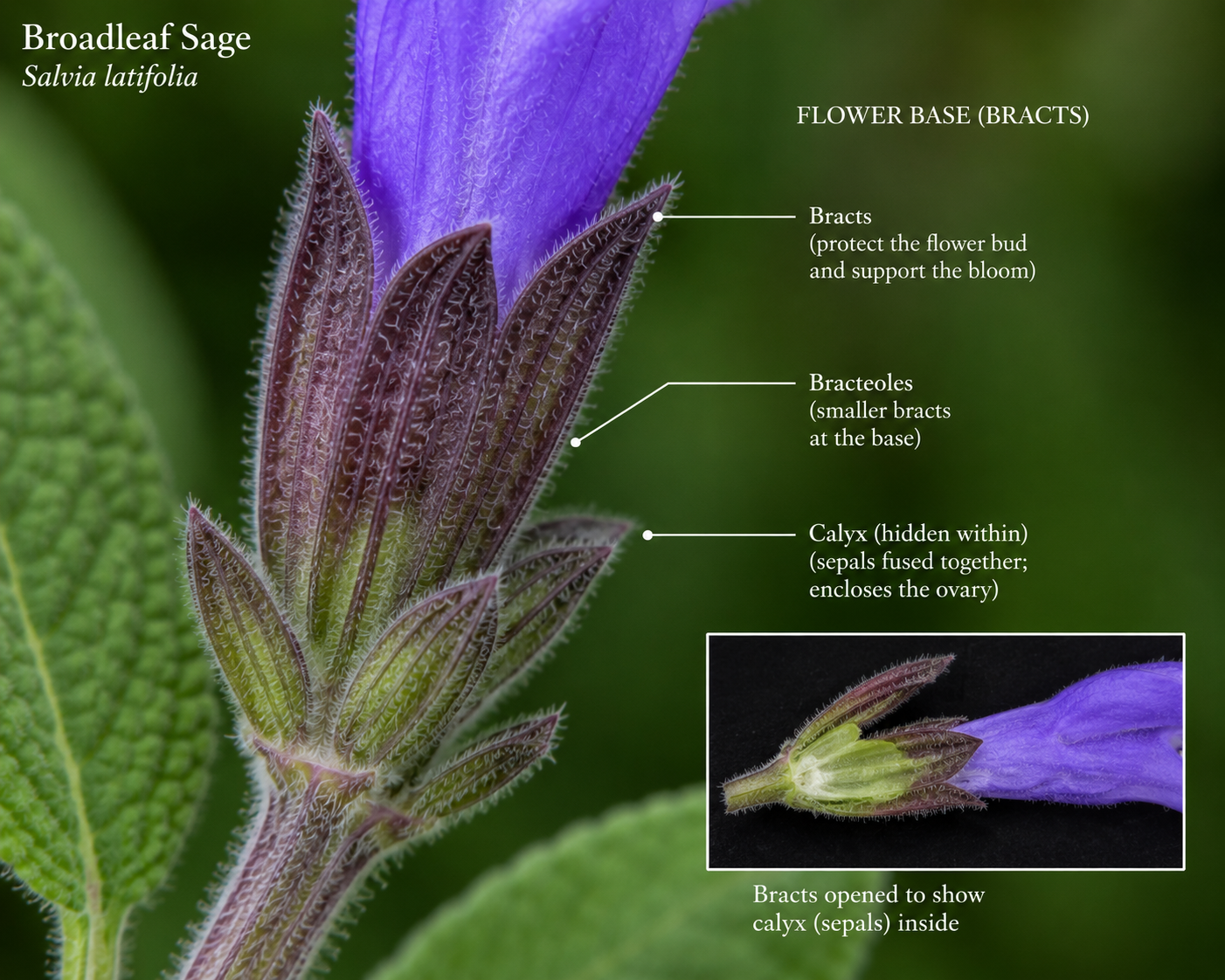
Small green to purple-tinted bracts beneath the flowers.
Seed Head / Seeds: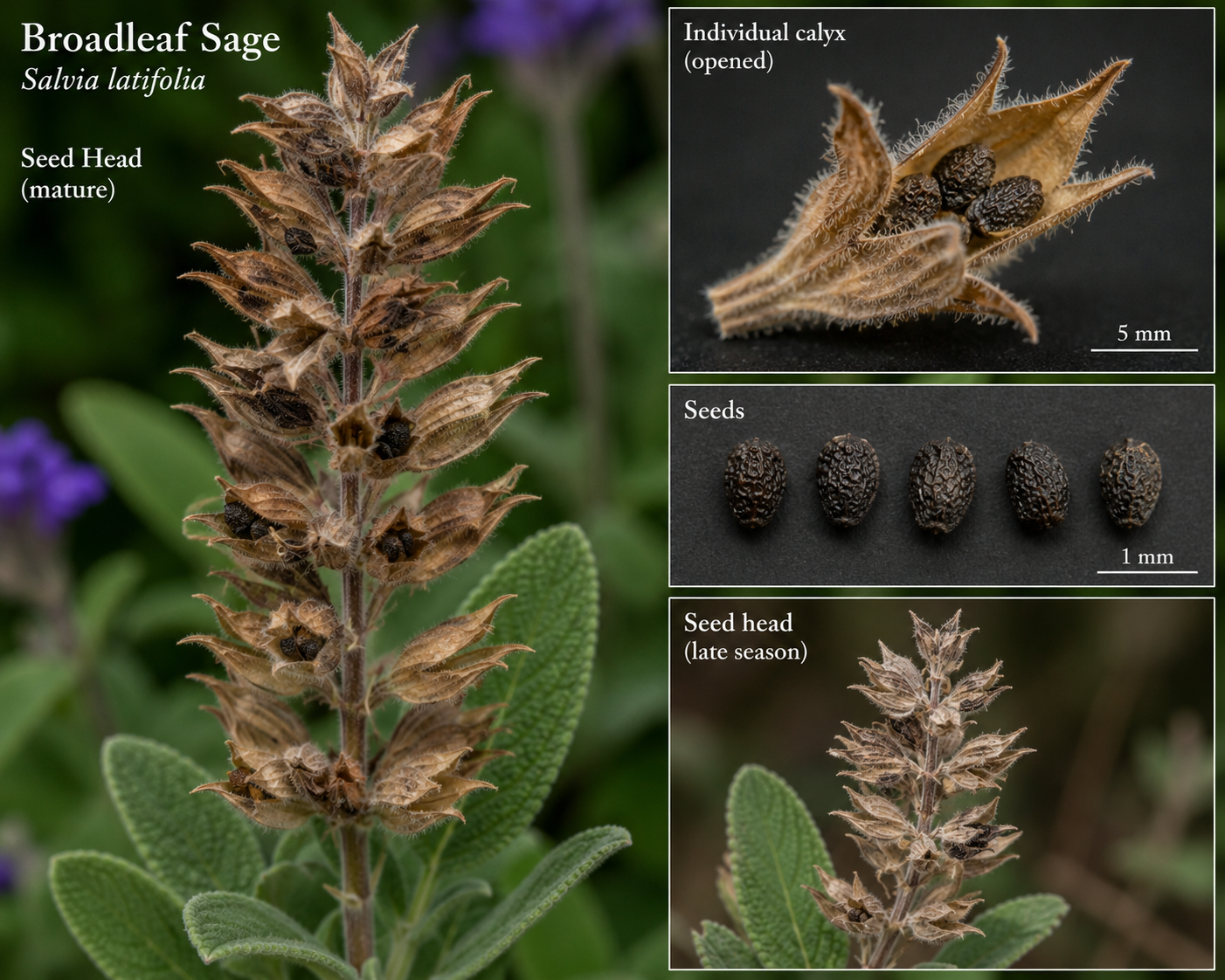
Dry seed heads containing tiny dark brown to black seeds.
Root: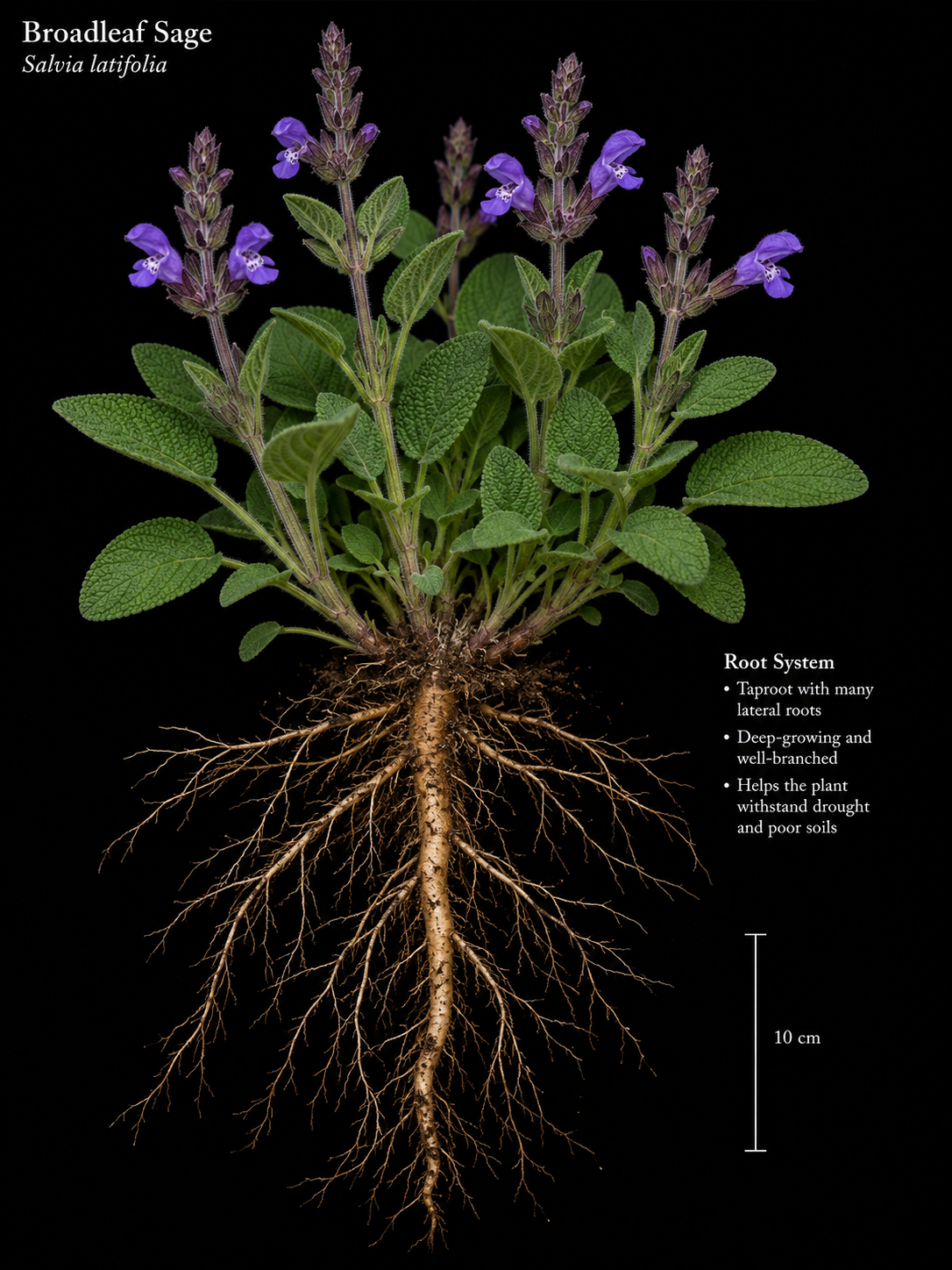
Fibrous root system attached to a woody perennial base.
| Growth Form: | Upright woody perennial herb with bushy growth. |
| Typical Size: | Usually 1–3 feet tall and wide depending on variety and pruning. |
| Aroma/Smell: | Strong, earthy, herbal, slightly peppery scent. |
| Where it Commonly Grows: | Herb gardens, containers, dry sunny beds, Mediterranean-style plantings, and homestead gardens. |
| Common Lookalikes: | Some ornamental salvias resemble sage but may have thinner leaves or different scents. True culinary sage has soft velvety gray-green leaves with a distinctly savory aroma. |
| Foraging Safety Note: | Properly identify sage before use. Avoid plants treated with pesticides or ornamental salvias not intended for culinary or medicinal use. Never forage any plant unless you are completely certain of identification. Use multiple features, not just one. |
What It’s Used For
| Traditionally Used For: | – Sore throat support – Mouth and gum support – Digestive support – Seasonal discomfort – Menopausal support – Excess perspiration – General wellness – Minor skin support |
How It Works:
| It Works By: | Sage has traditionally been used as an aromatic, warming, and astringent herb. Its volatile oils and tannins contribute to its long history of use in traditional throat, digestive, and cleansing preparations. |
How to Use It
| Tea: | 1 teaspoon dried leaves per cup of hot water; steep covered 5–10 minutes. Traditionally used up to 3 times daily. |
| Decoction: | NA |
| Tincture: | Traditionally used in small amounts, often 20–40 drops up to 3 times daily. |
| Glycerite: | Alcohol-free extract option; follow preparation strength. |
| Infused Oil: | Leaves infused into carrier oil for external preparations. |
| Salve/Balm: | Applied externally to minor skin areas as needed. |
| Poultice: | Crushed fresh leaves traditionally applied externally. |
| Compress/Fomentation: | Strong tea applied externally with cloth. |
| Syrup: | Occasionally combined into seasonal herbal blends. |
| Oxymel: | Traditionally combined with vinegar and honey in small amounts. |
| Powder: | Dried powdered leaf sometimes used in capsules or blends. |
| Capsule: | Available in commercial herbal products. |
| Fresh Use: | Fresh leaves traditionally used in teas, steams, cooking, and gargles. |
Safety & Considerations
| Avoid If: | Avoid excessive medicinal use during pregnancy or while breastfeeding unless supervised by a qualified professional. Use caution with seizure disorders. |
| Possible Side Effects: | Stomach upset, allergic reaction, or irritation in sensitive individuals. Excessive use is not recommended. |
| Interactions with Pharmaceuticals, OTCs, and Other Herbs: | Use caution with sedatives, seizure medications, blood sugar medications, and herbs with similar effects. |
| General Safety Note: | Culinary use is generally considered safe for most people. Use medicinally in moderation and discontinue use if unwanted reactions occur. This information is for educational and traditional-use purposes only and is not medical advice. |
Sourcing:
| Grow It: | How to Grow Sage |
| Forage: | Occasionally escapes cultivation in warm climates but primarily grown intentionally in gardens and containers |
| Purchase: | Lowe Bridges Farm |
Additional Notes & Information:
Sage has been valued for centuries as both a culinary and medicinal herb. It is one of the classic homestead herbs because of its usefulness in the kitchen, garden, and traditional herbal preparations.