Medicinal Profile of Echinacea
Herb Overview
| Common Names: | Echinacea, Purple Coneflower, Coneflower, Eastern Purple Coneflower |
| Botanical Name: | Echinacea purpurea |
| Plant Family: | Asteraceae |
| Origins: | Native to central and eastern North America |
| Parts Used: | Root, leaf, flower, aerial parts |
| Primary Preparations: | Tea, tincture, glycerite, powder, capsule, infused honey, syrup, fresh plant preparations |
Plant Identification
Full Plant (in ground): 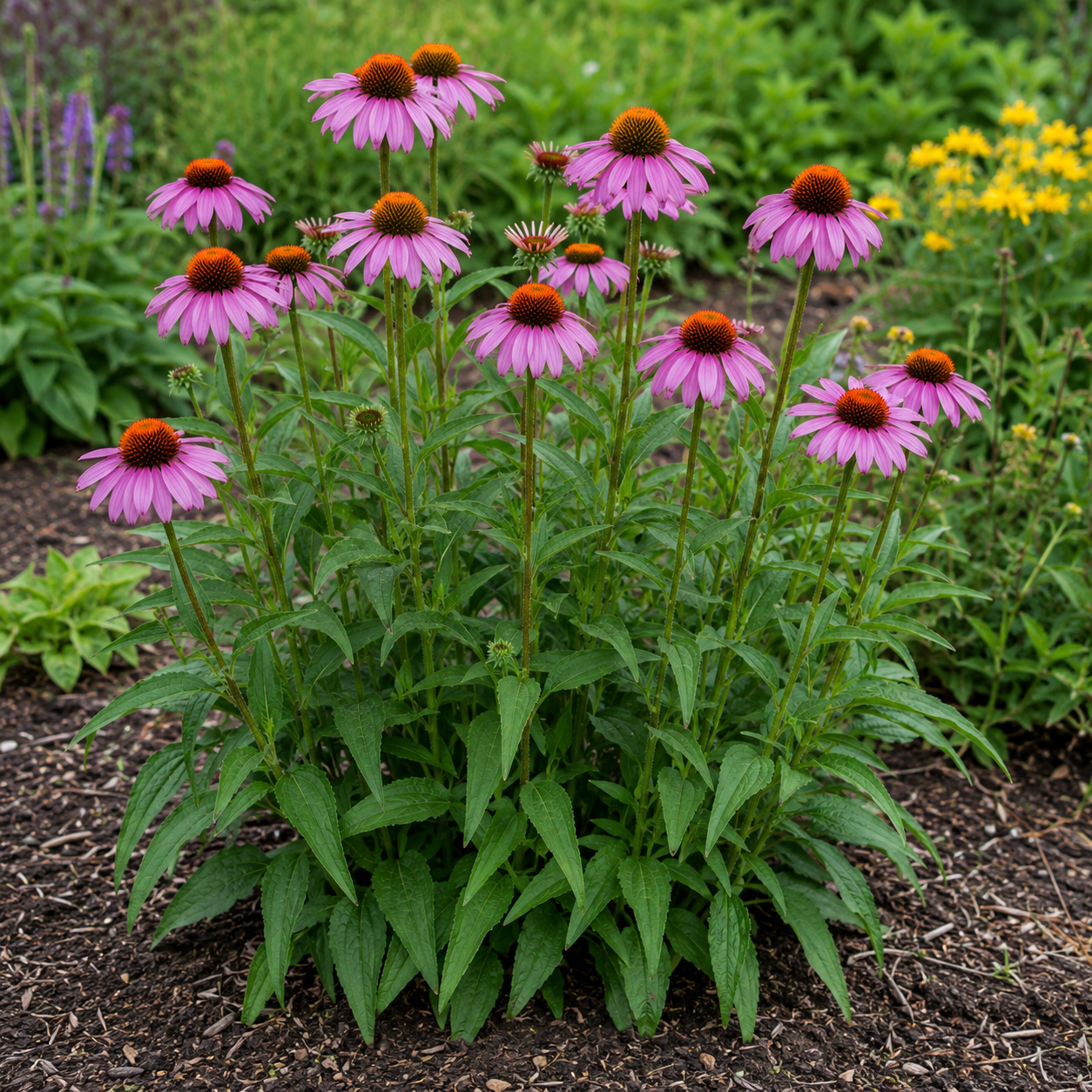
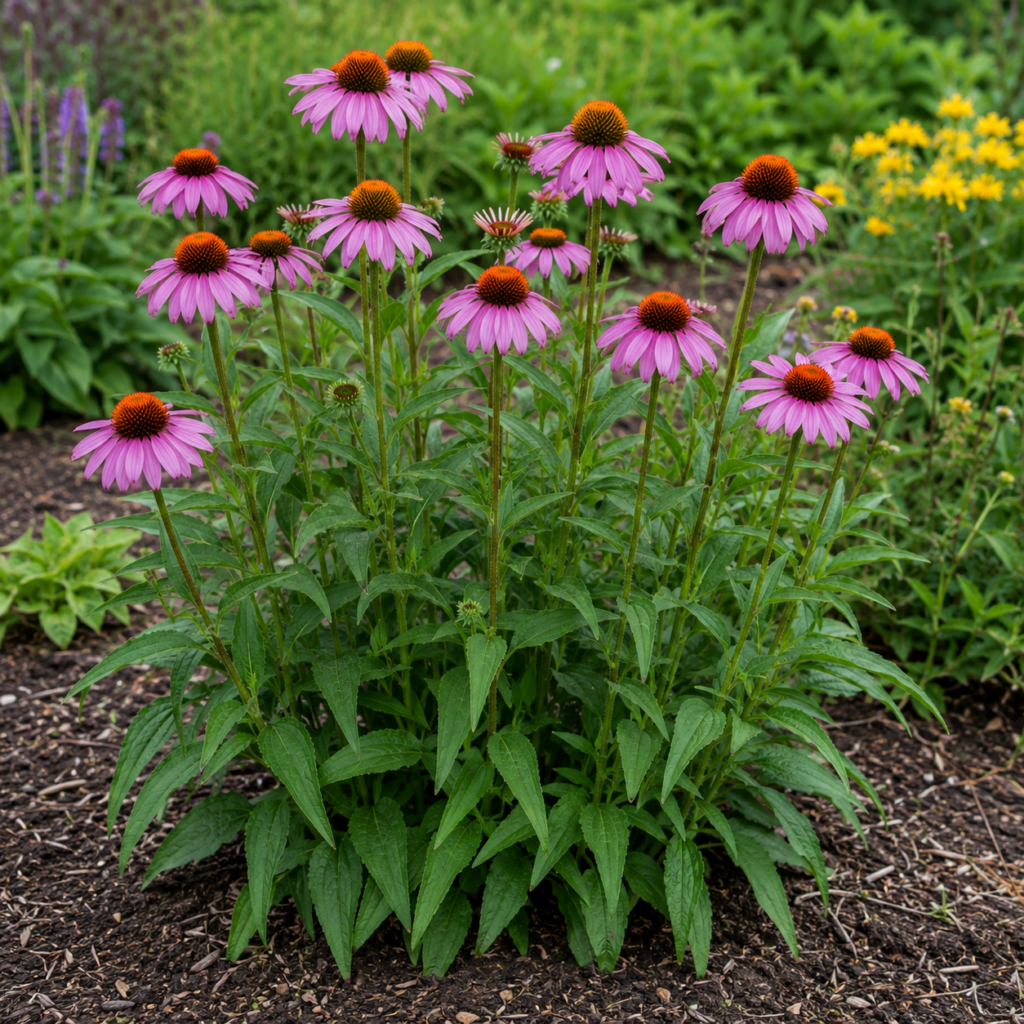
Echinacea grows as an upright perennial with sturdy stems, rough green leaves, and daisy-like flowers with raised cone-shaped centers. Mature plants often form clumps and may send up several flowering stems from the crown.
Leaves (mature): 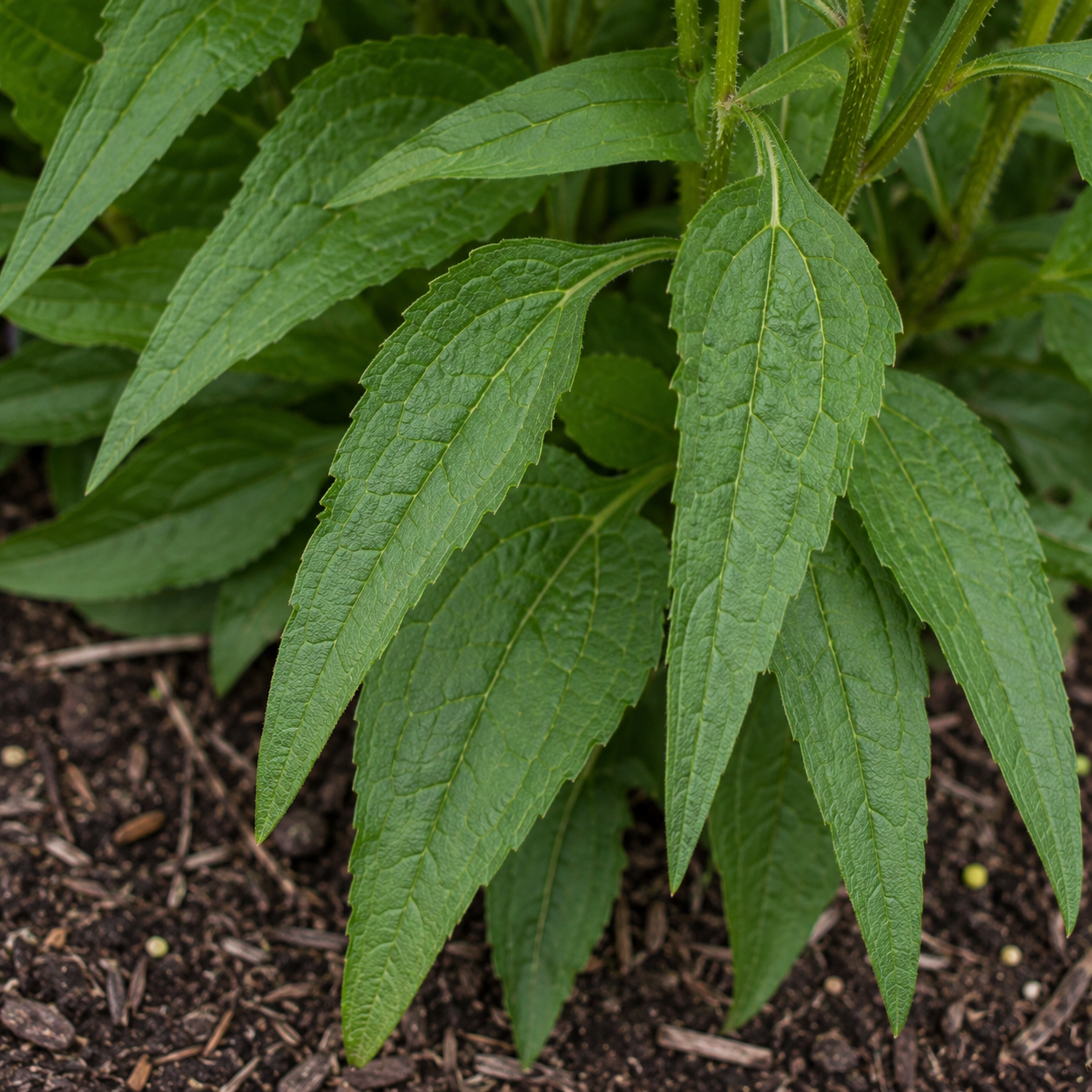
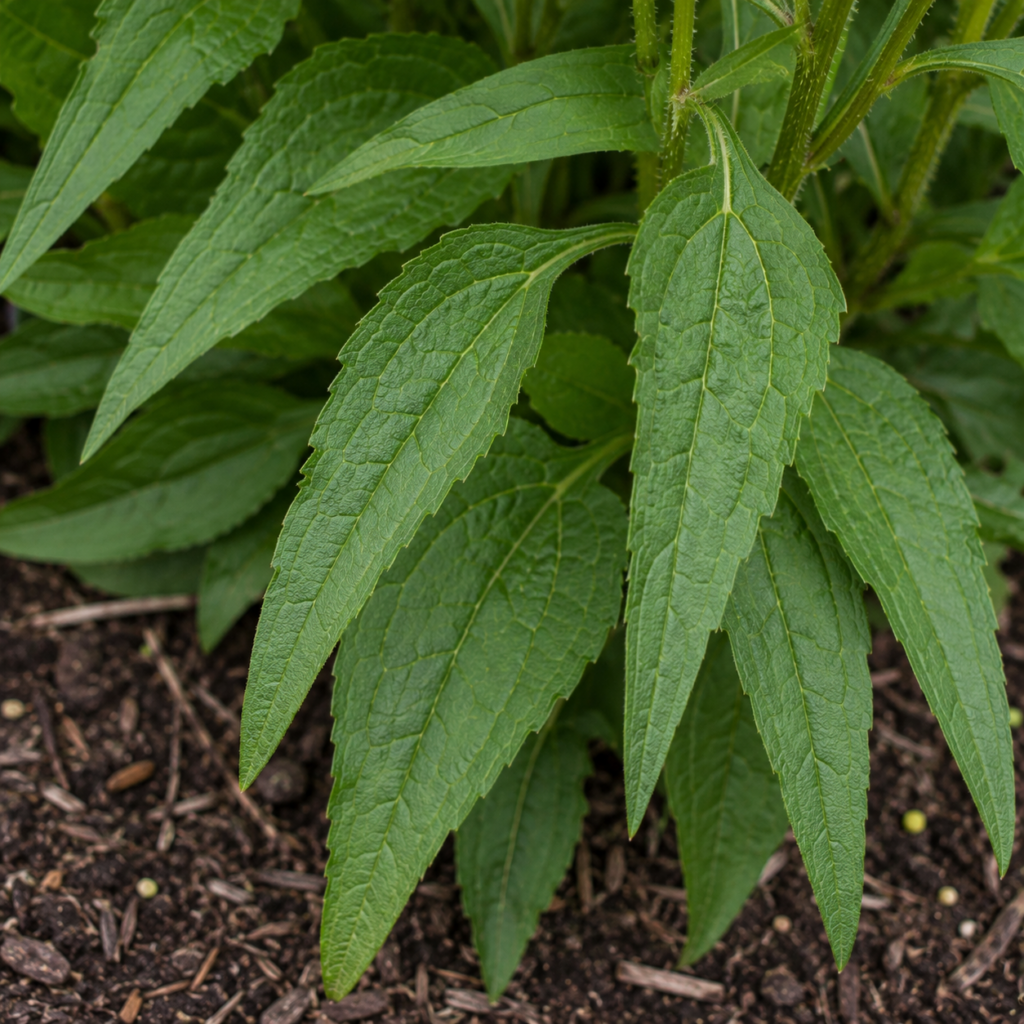
Mature echinacea leaves are green, lance-shaped to oval, and slightly rough or bristly to the touch. The leaf edges may be lightly toothed, and the leaves usually have visible veins.
Leaves (early growth): 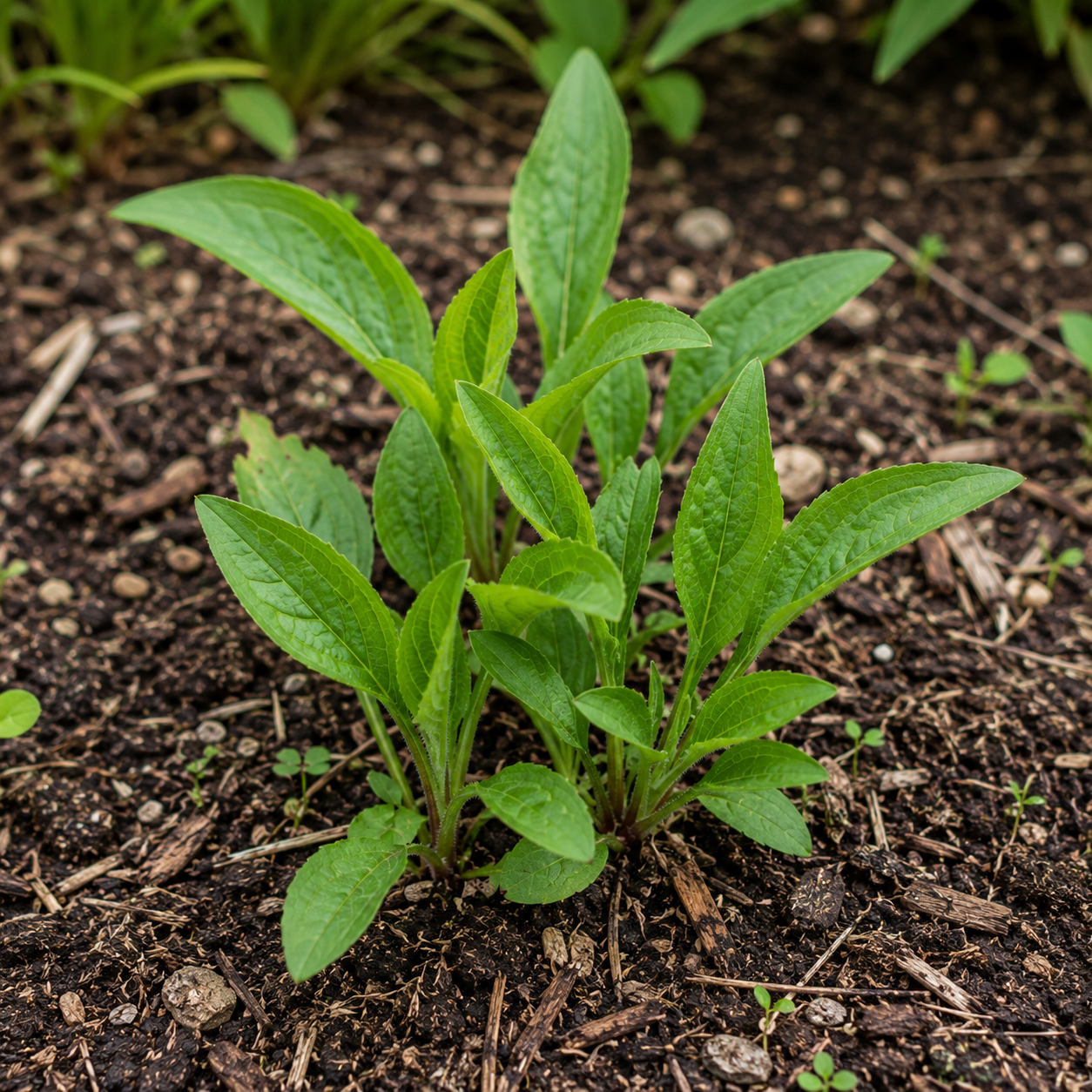
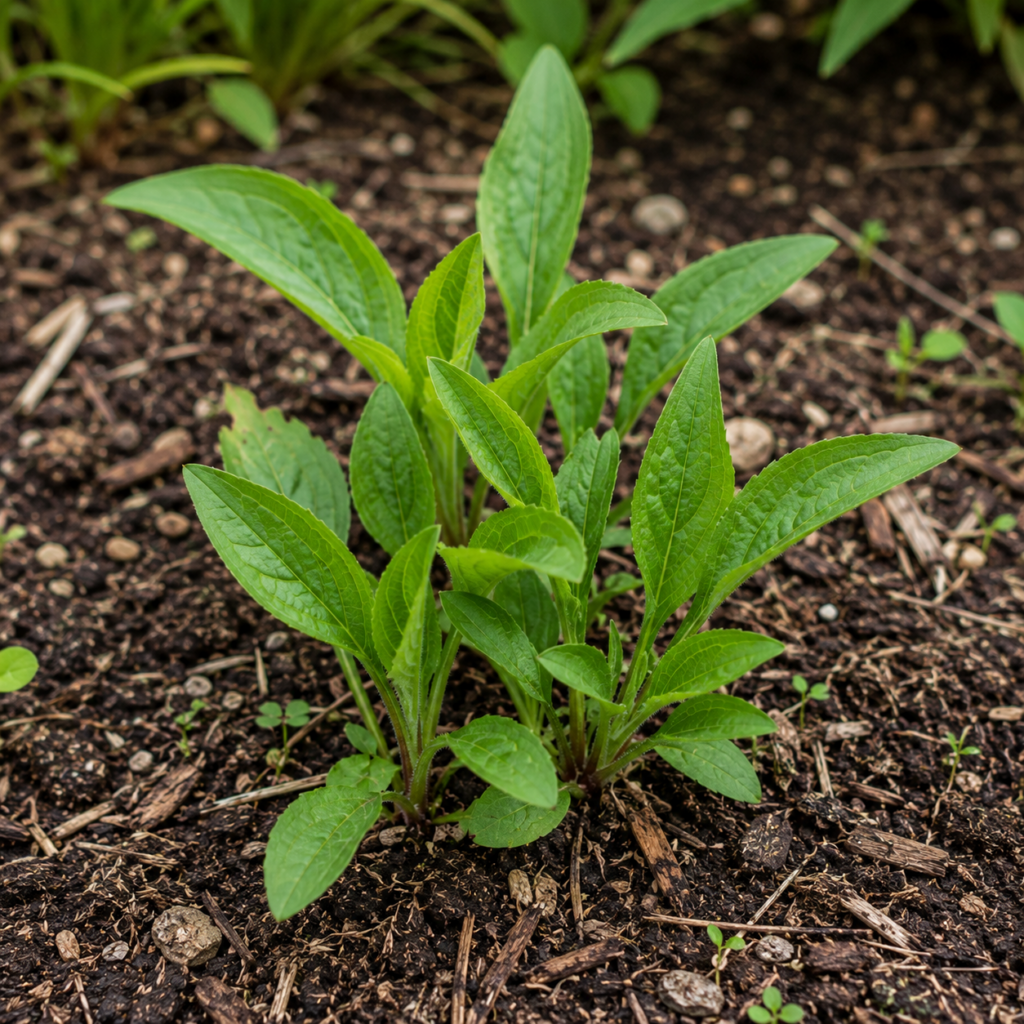
Young echinacea leaves appear as low green growth near the soil surface. Early leaves are smaller, somewhat oval, and may look slightly fuzzy or textured before the plant sends up taller stems.
Stem: 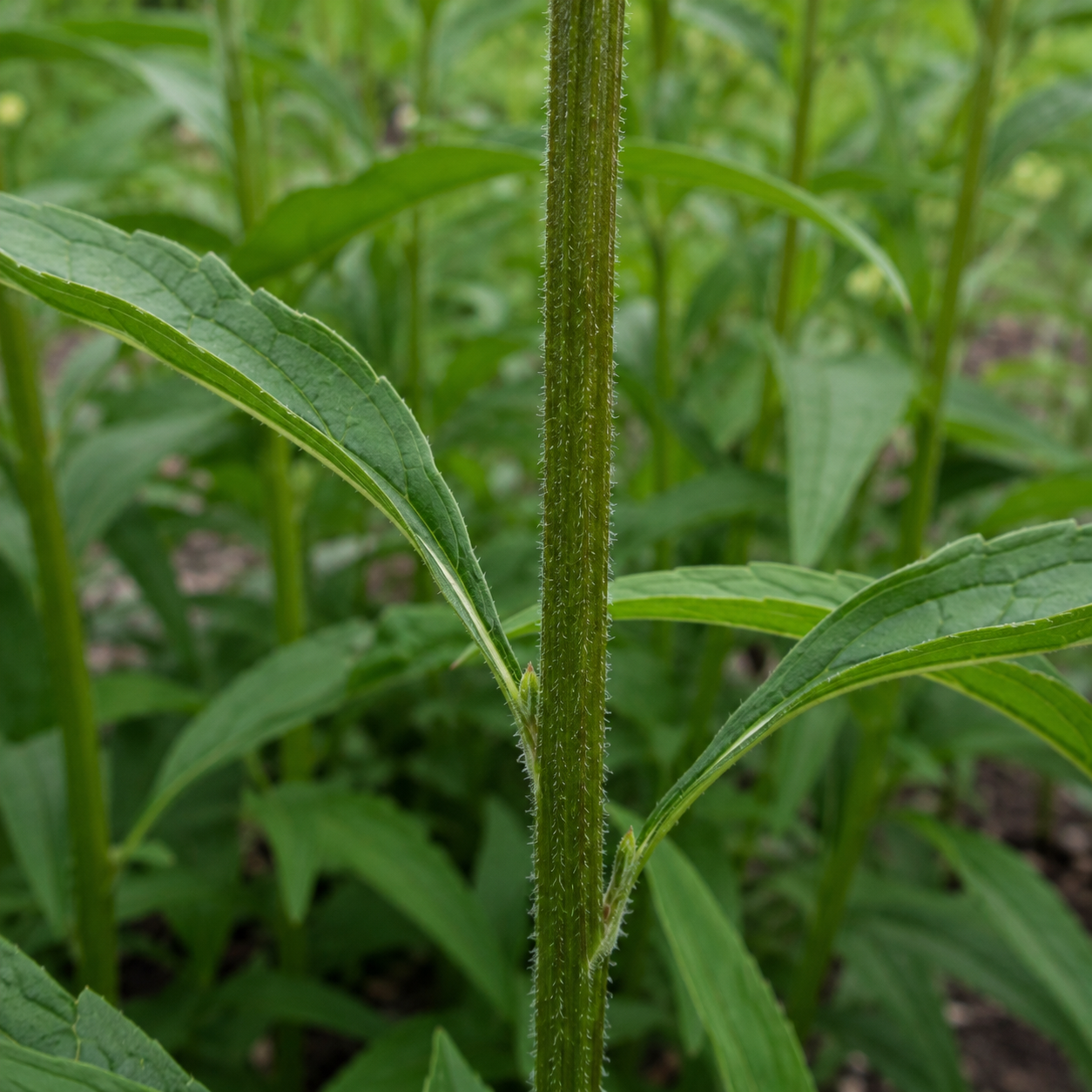
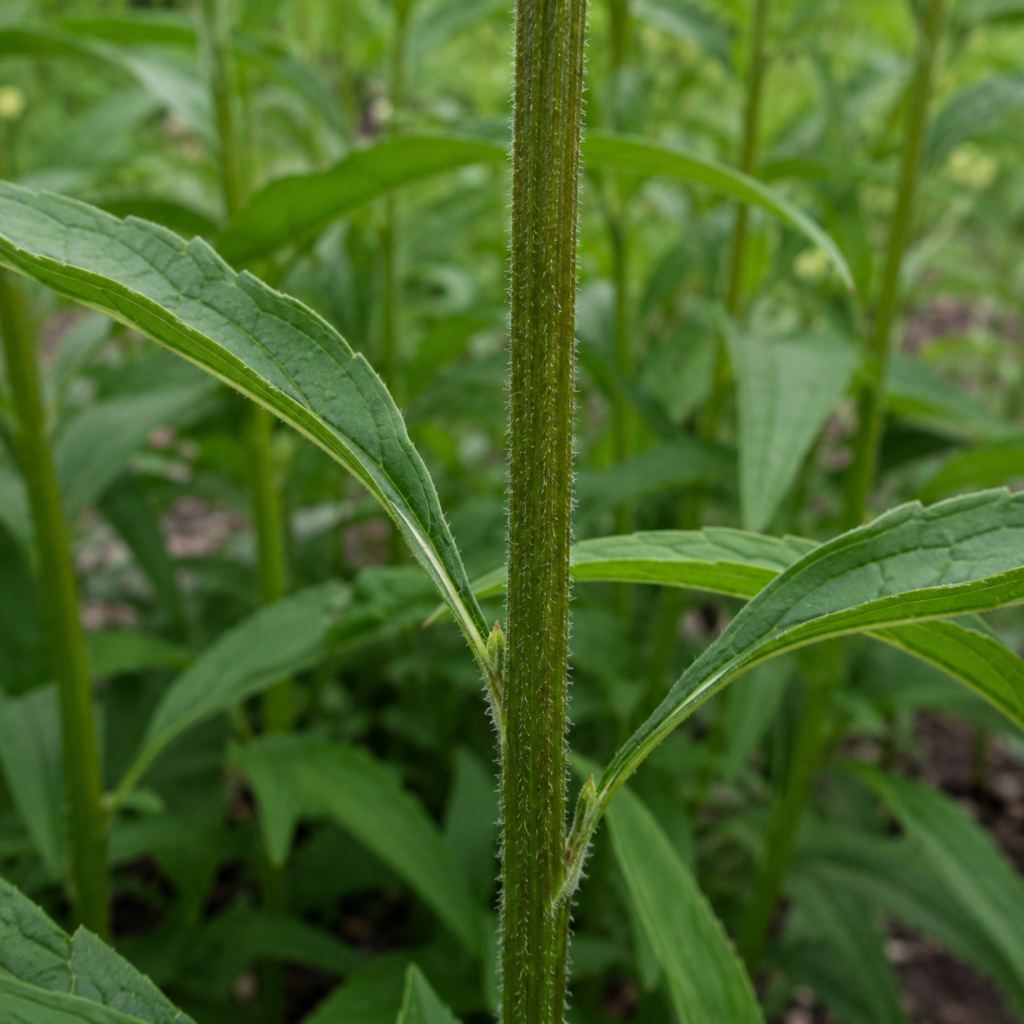
Echinacea stems are upright, firm, green, and often slightly hairy or rough. Flowering stems are usually unbranched or lightly branched, depending on the plant and growing conditions.
Flower (Top View): 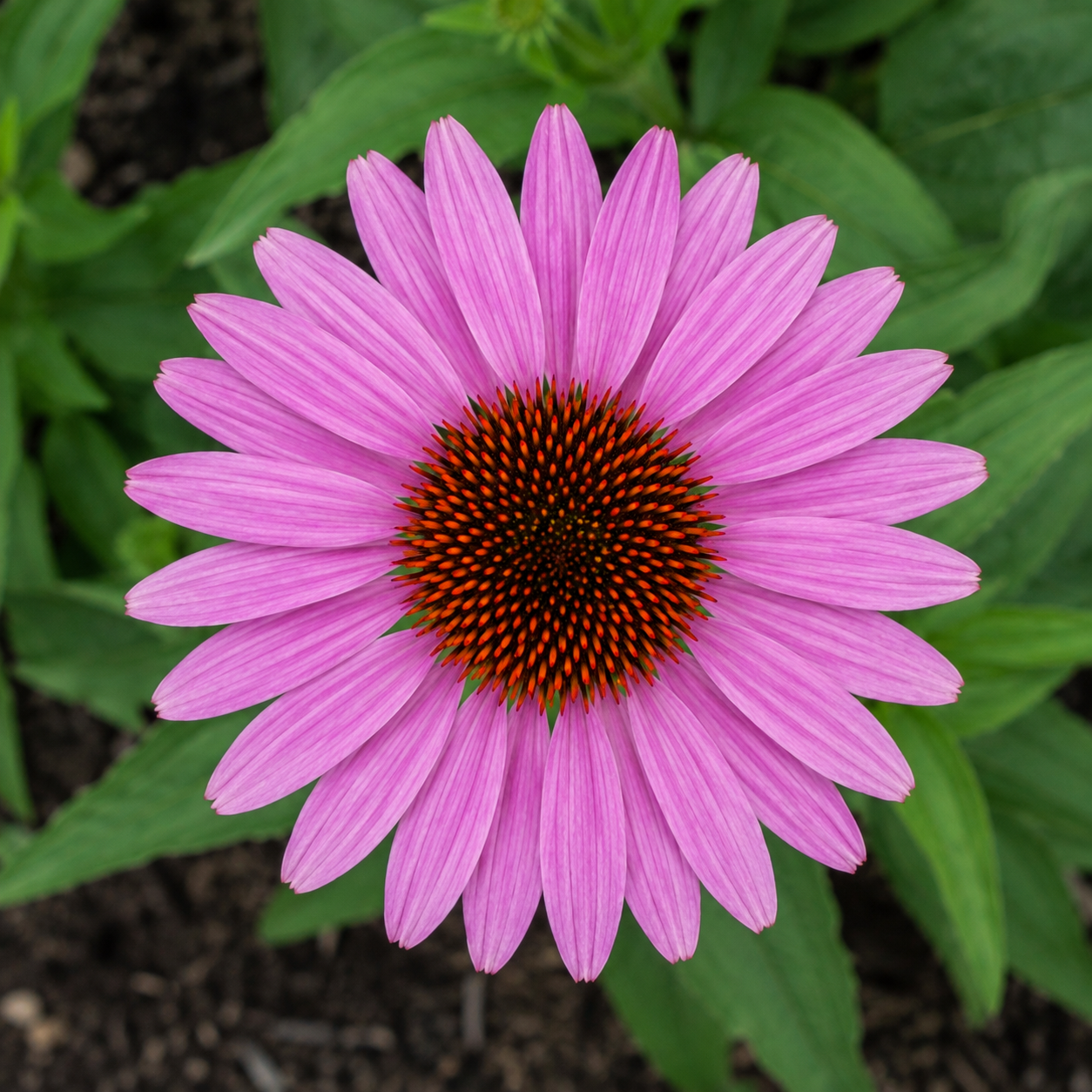
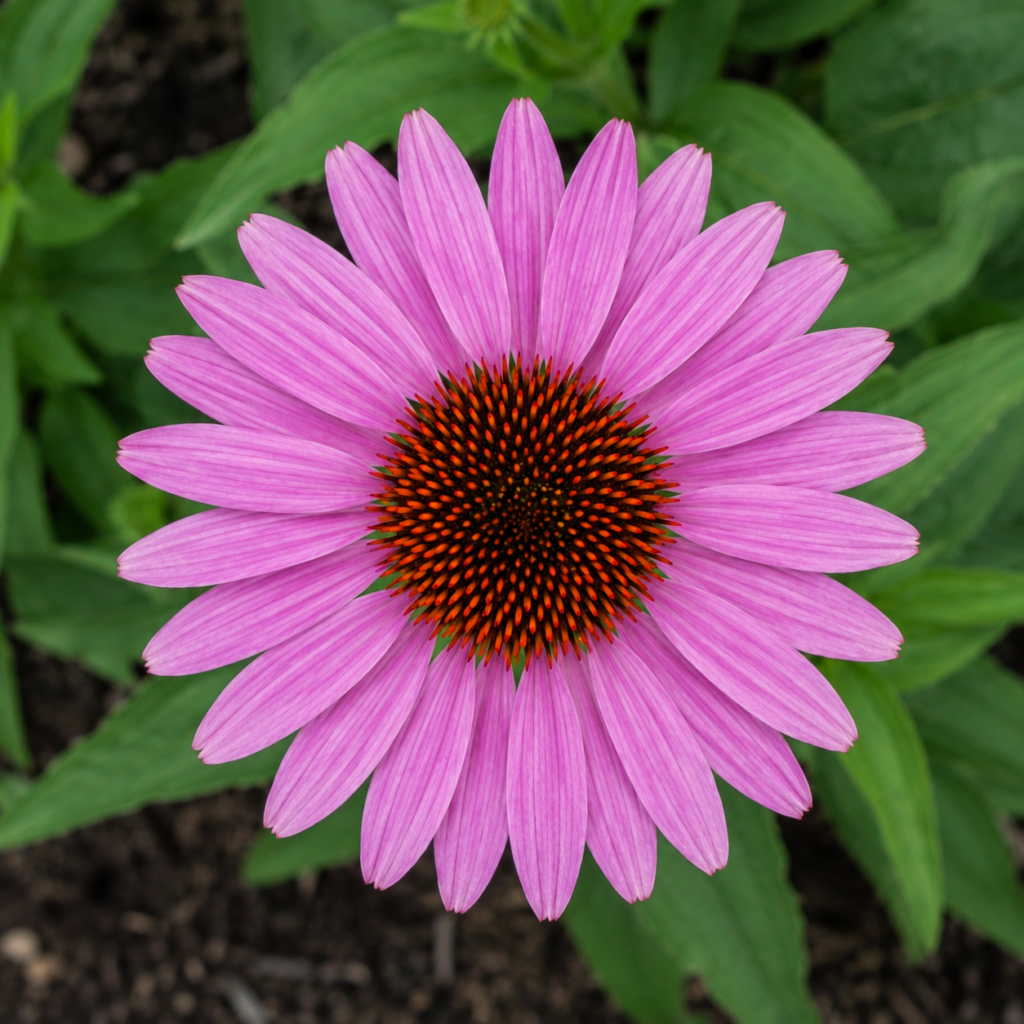
From above, echinacea flowers have drooping purple-pink petals surrounding a raised orange-brown cone. The flower center is rounded and prickly-looking.
Flower (Side View): 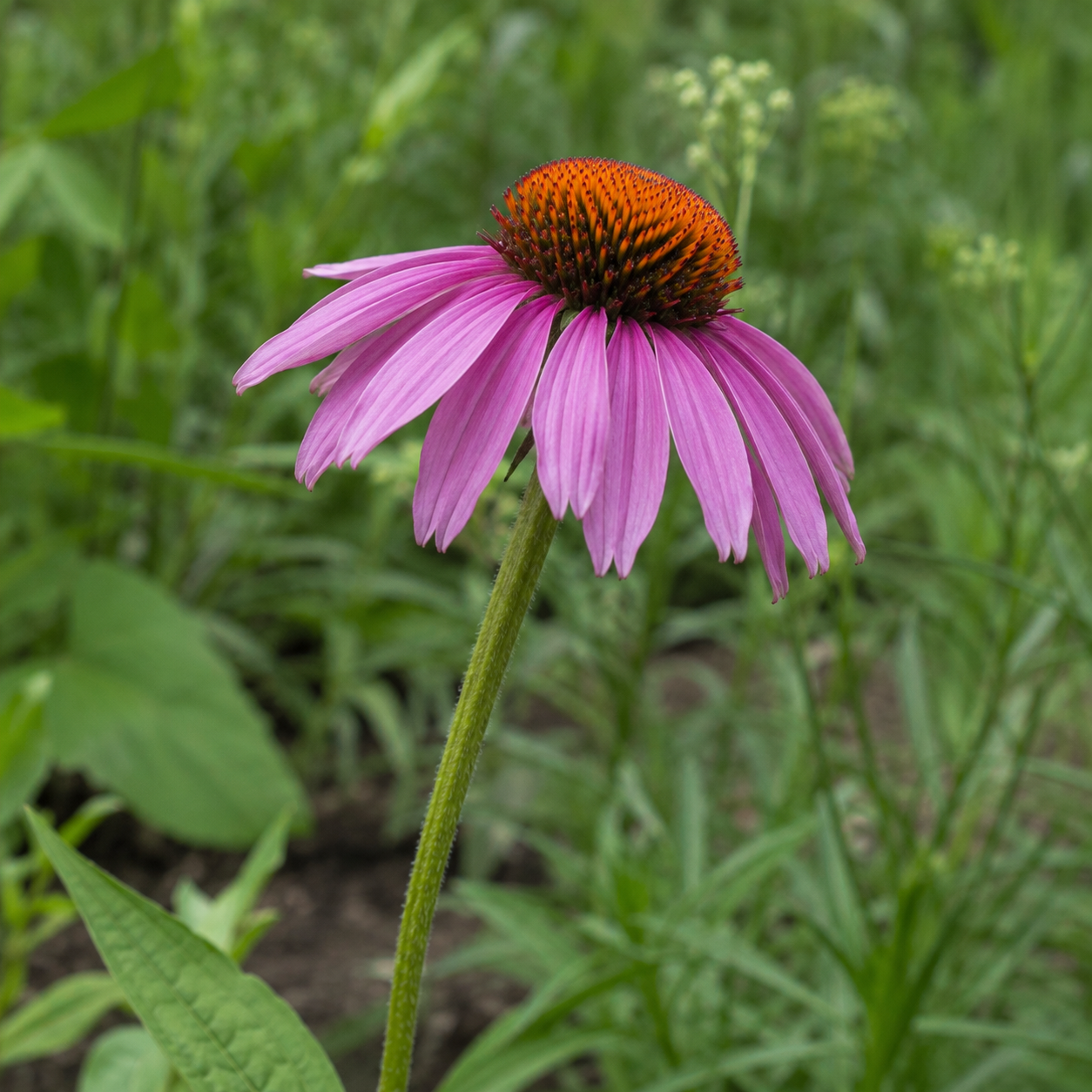
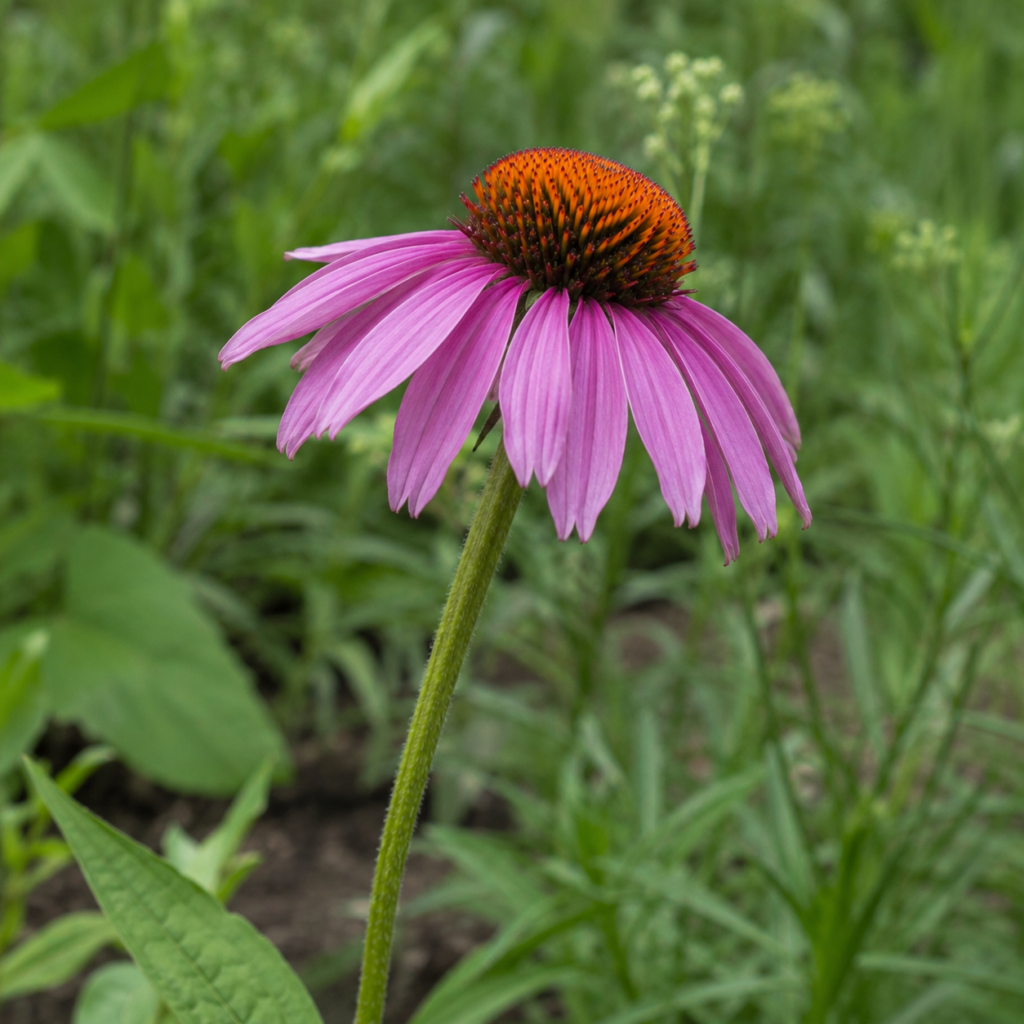
From the side, echinacea flowers often show petals that angle downward from the central cone. This drooping petal shape is one of the easiest ways to recognize mature purple coneflower blooms.
Flower Base (bracts):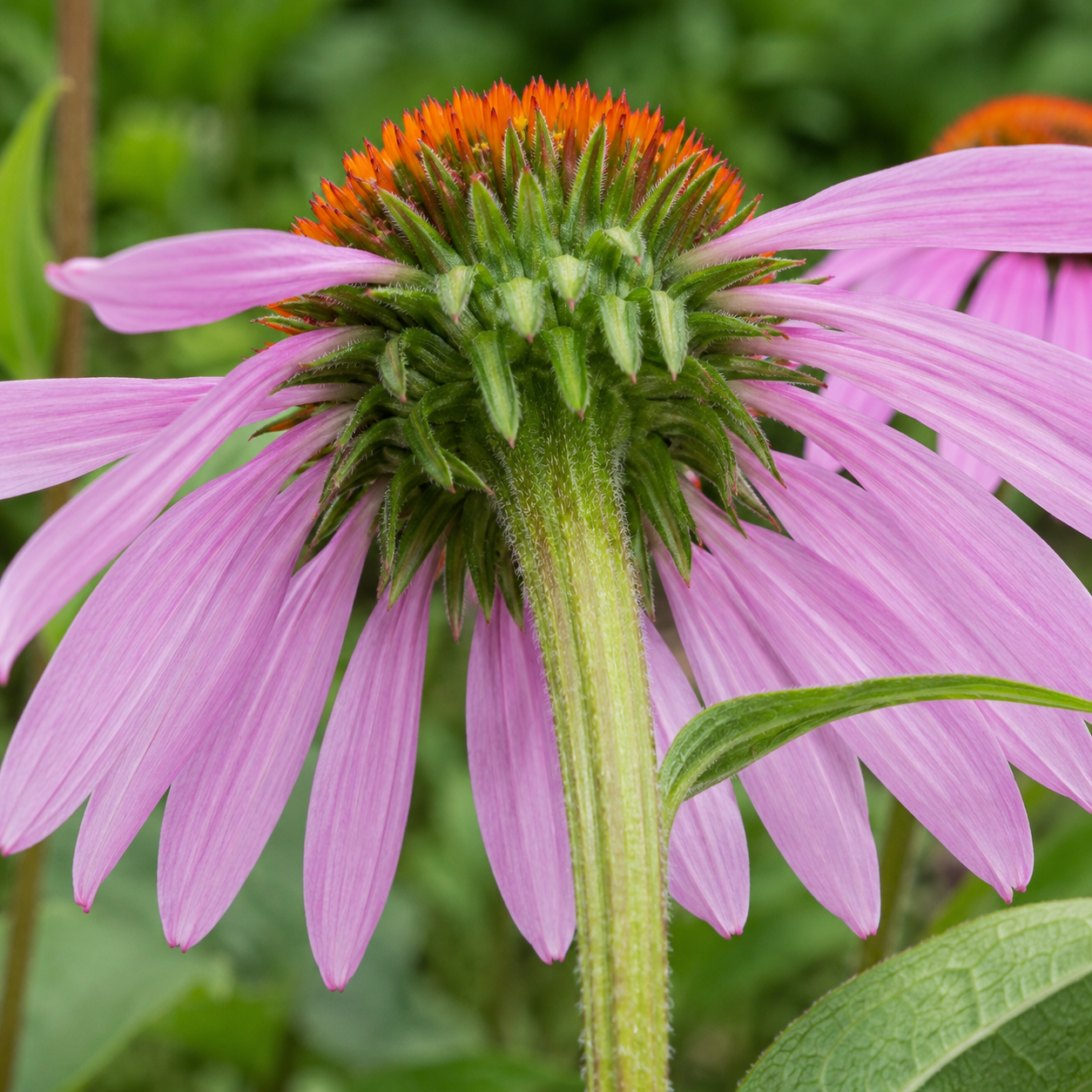
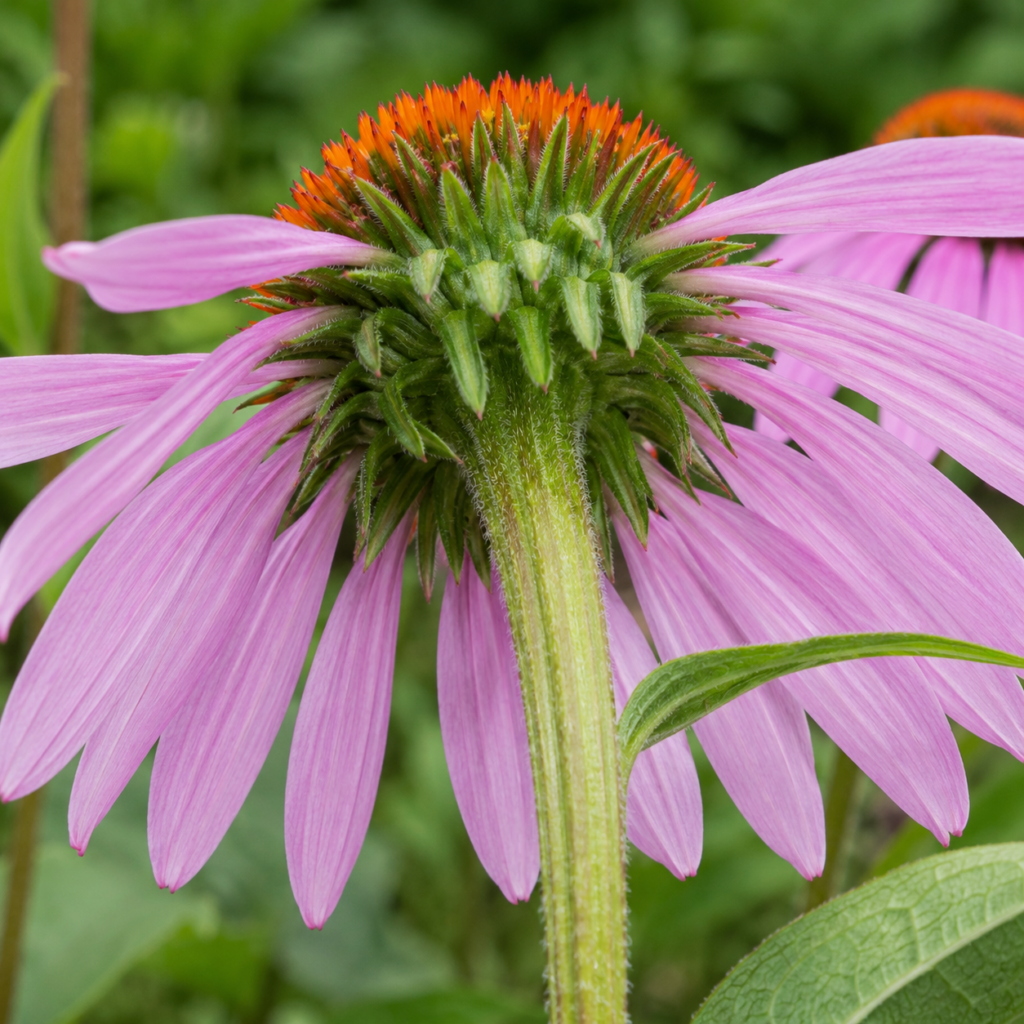
The flower base has narrow green bracts beneath the petals. These bracts support the flower head and may appear slightly pointed or layered.
Seed Head / Seeds: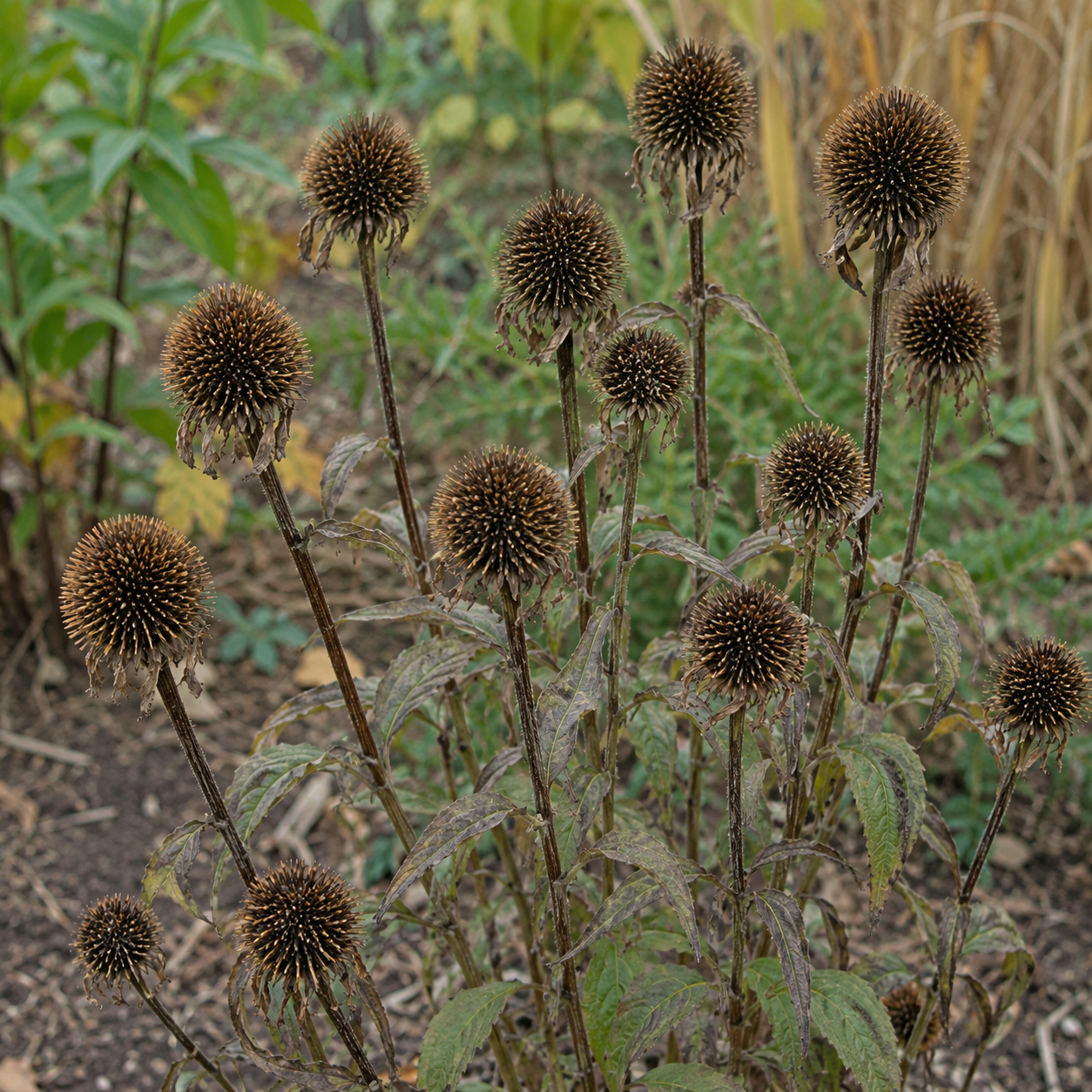
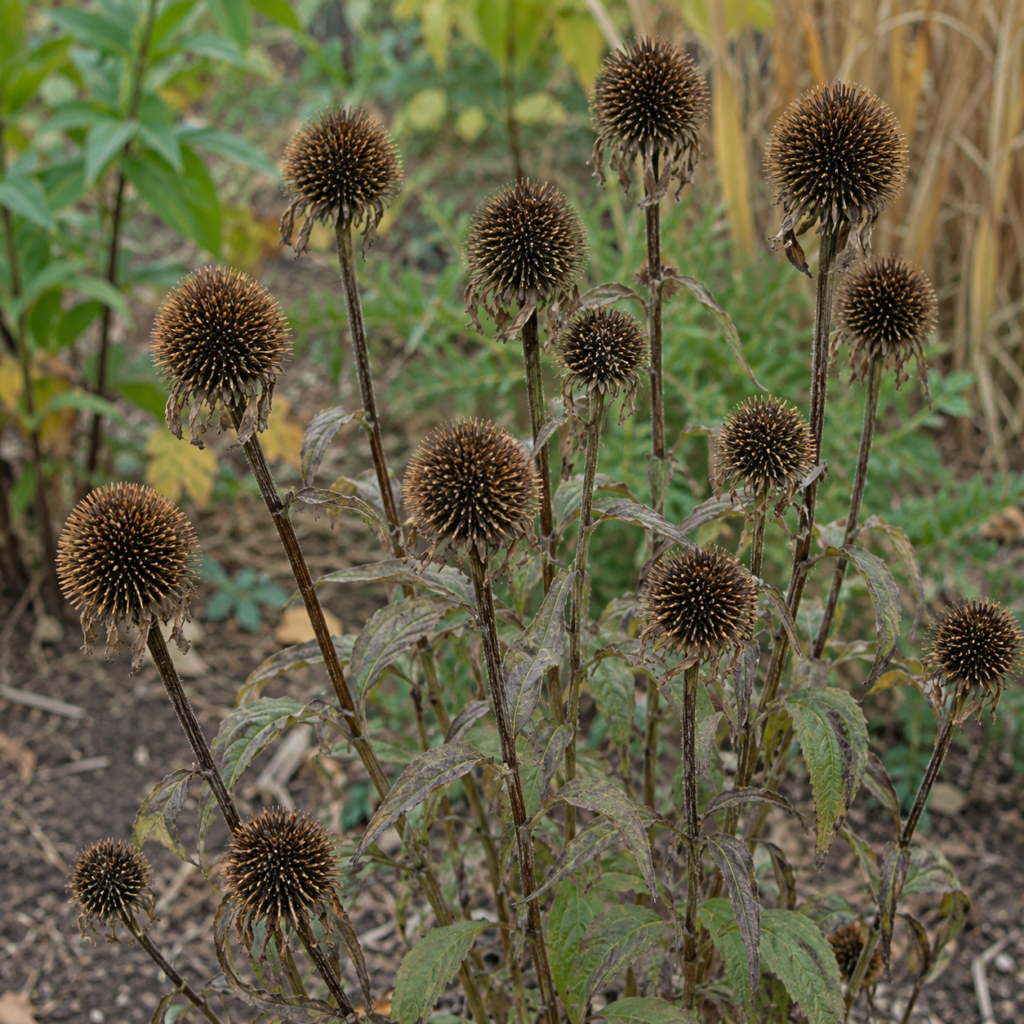
After flowering, the petals fade and fall away, leaving the stiff cone-shaped seed head. Mature seed heads dry brown and hold small dark seeds among the prickly center.
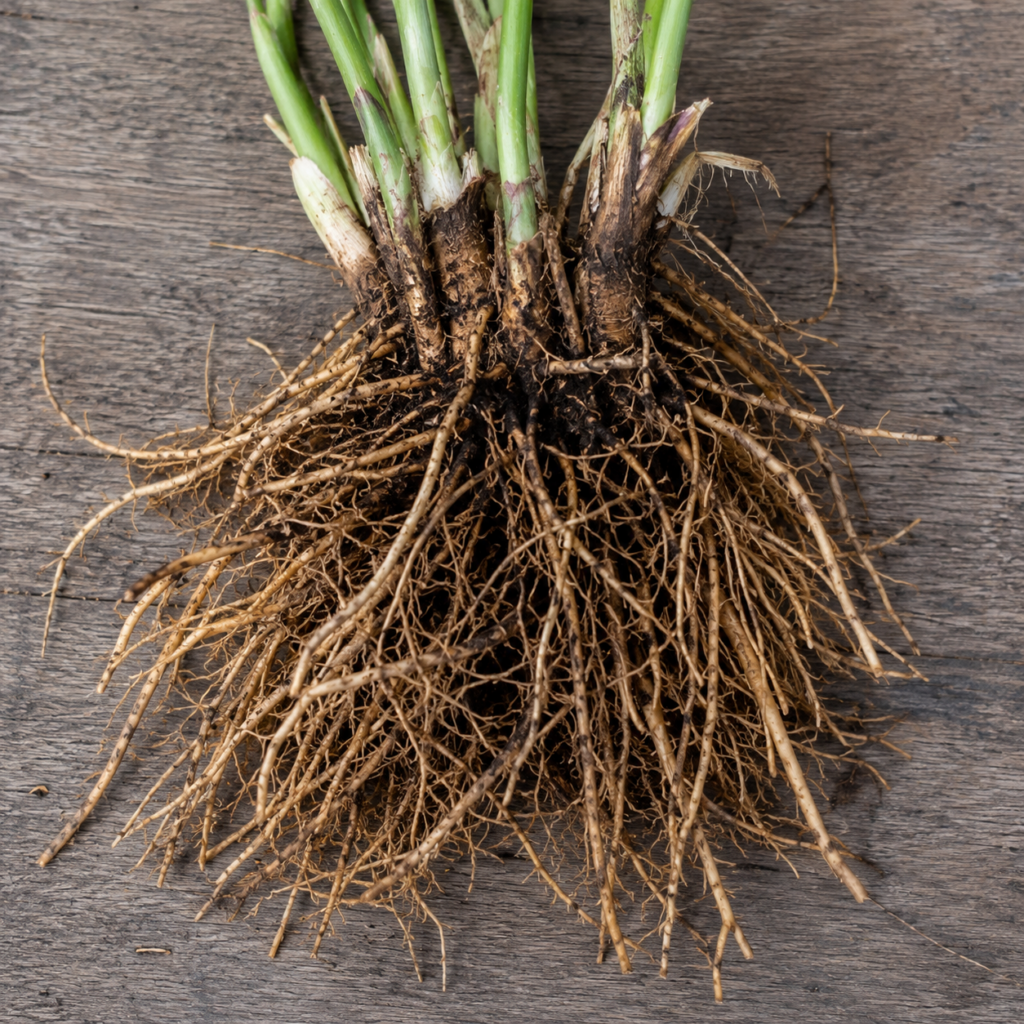
Root: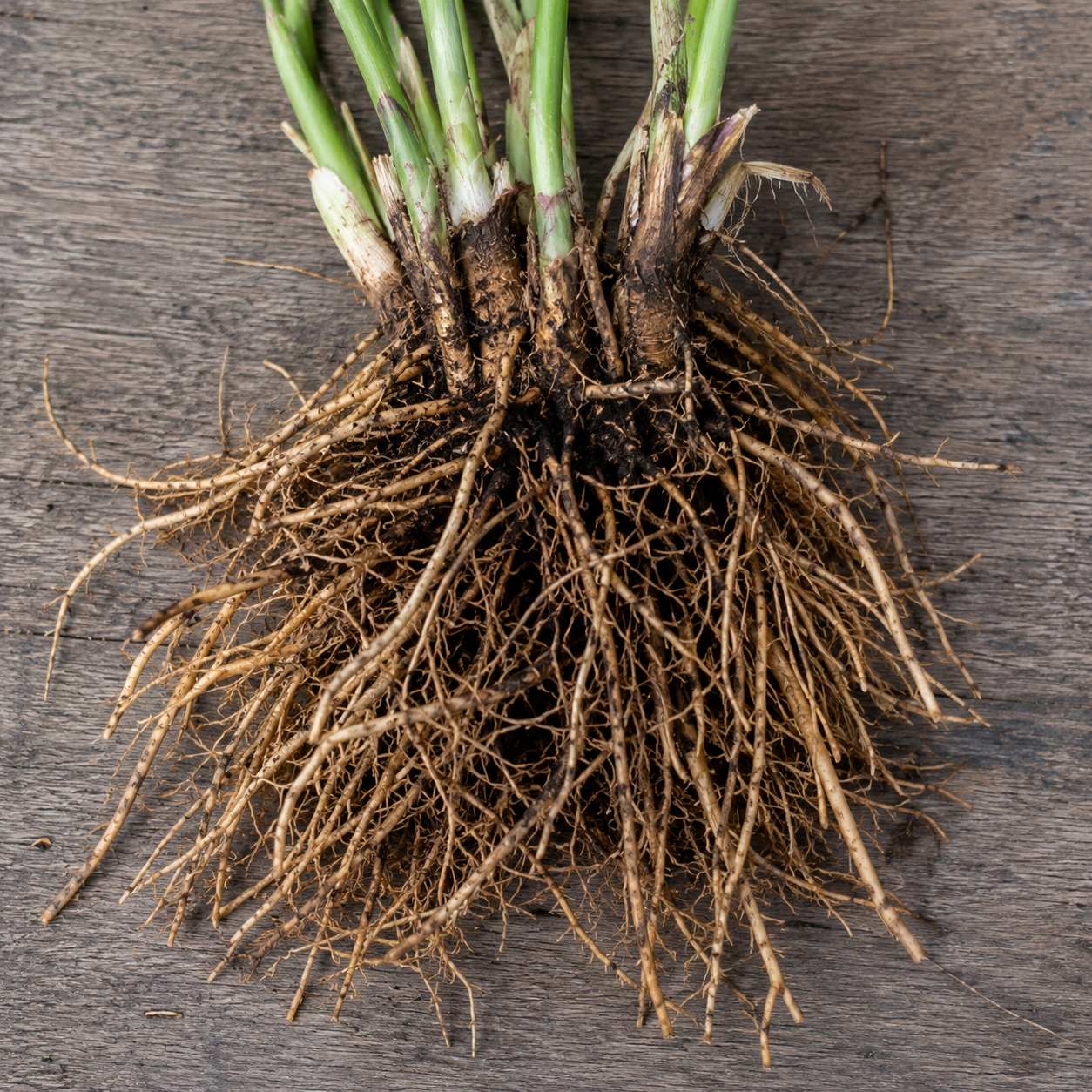
Echinacea roots are fibrous with a crown at the base of the plant. Older plants may develop a stronger root mass that can be divided carefully when the clump is mature.
| Growth Form: | Upright clumping perennial |
| Typical Size: | Usually 2 to 4 feet tall and 1 to 2 feet wide, depending on variety and growing conditions |
| Aroma/Smell: | Mild, earthy, slightly grassy scent; not strongly aromatic like mint or rosemary |
| Where it Commonly Grows: | Prairies, open fields, native plant gardens, pollinator gardens, herb gardens, well-drained borders, and sunny perennial beds |
| Common Lookalikes: | Black-eyed Susan has yellow petals and a dark center rather than purple-pink petals and a raised orange-brown cone. Rudbeckia and other coneflowers may look similar, so always confirm the leaf shape, flower color, cone shape, and plant growth habit before harvesting. |
| Foraging Safety Note: | Do not harvest wild echinacea unless you are completely sure of identification and local harvesting rules. Many native stands should be left alone for pollinators and seed production. For home use, it is better to grow echinacea in your own garden. Never forage any plant unless you are completely certain of identification. Use multiple features, not just one. |
What It’s Used For
| Traditionally Used For: | Echinacea has traditionally been used for seasonal immune support, especially during cold and respiratory season. It has also been used for sore throat support, swollen glands, minor skin irritations, slow-healing skin, and general immune stimulation during short-term illness. Echinacea is not a cure for colds, flu, infections, or immune disorders. In the home apothecary, it is best treated as a short-term supportive herb rather than a daily long-term tonic. |
How It Works:
| It Works By: | Echinacea is traditionally understood as an immune-supporting herb. It contains plant compounds that may help support the body’s natural immune response. Herbalists often use echinacea at the first sign of seasonal illness or for short periods when the body needs extra immune support. Echinacea is also considered mildly anti-inflammatory and has been used externally in traditional herbal practice for minor skin concerns. Because it may stimulate immune activity, it is not the right herb for everyone. |
How to Use It
| Tea: | Use 1 to 2 teaspoons dried echinacea aerial parts or root per 8 ounces hot water. Steep covered for 10 to 15 minutes. Traditionally used up to 2 to 3 times daily for short periods. |
| Decoction: | Use for tougher root pieces. Add 1 teaspoon dried echinacea root to 1 cup water. Simmer gently for 10 to 15 minutes, then strain. Traditionally used short-term. |
| Tincture: | Common traditional adult use is 1 to 2 droppersful, up to 3 times daily for short periods. Follow the directions on the specific tincture being used. |
| Glycerite: | Often used when avoiding alcohol. Follow product directions or use in small traditional serving amounts. Glycerites are commonly used for children, but children should use echinacea only with guidance from a qualified healthcare provider. |
| Infused Oil: | NA for primary internal immune use. Echinacea infused oil may be used externally in skin preparations, but it is not the most common preparation. |
| Salve/Balm: | May be used externally for minor skin support when properly prepared. Do not apply to deep wounds, infected wounds, or serious skin problems. |
| Poultice: | Fresh leaf or root poultices have been used traditionally on minor skin irritations. Use only on clean, minor skin concerns and discontinue if irritation occurs. |
| Compress/Fomentation: | A strong tea may be used as a cooled compress for minor external skin support. Do not use on serious wounds or unexplained rashes. |
| Syrup: | Echinacea can be added to immune-support syrups, often with elderberry, ginger, or other seasonal herbs. Use short-term and follow the recipe’s serving guidance. |
| Oxymel: | Echinacea may be prepared in vinegar and honey as an oxymel for seasonal support. Use in small serving amounts and avoid giving honey preparations to children under 1 year old. |
| Powder: | Dried echinacea root or aerial parts may be powdered and added to capsules or blended into other preparations. Powder loses strength faster than whole dried herb. |
| Capsule: | Follow product label directions. Capsules vary widely in strength depending on plant part, species, and preparation. |
| Fresh Use: | Fresh echinacea leaf, flower, or root may be used in tinctures, teas, poultices, or fresh plant preparations. Fresh root is strong and should be used thoughtfully. |
Safety & Considerations
| Avoid If: | Avoid echinacea if you are allergic to plants in the Asteraceae family, including ragweed, daisies, chrysanthemums, marigolds, or related plants. Avoid if you have had an allergic reaction to echinacea before. |
| Possible Side Effects: | Possible side effects include stomach upset, nausea, abdominal discomfort, rash, itching, dizziness, headache, or allergic reaction. Allergic reactions can be serious. |
| Interactions with Pharmaceuticals, OTCs, and Other Herbs: | Echinacea may not be appropriate with immune-suppressing medications, transplant medications, some cancer treatments, corticosteroids, or medications that affect the liver. Use caution with autoimmune conditions unless guided by a qualified healthcare provider. |
| General Safety Note: | Echinacea is best used short-term. Do not use it as a daily long-term herb without professional guidance. Pregnant or breastfeeding women, children, people with autoimmune conditions, transplant patients, and anyone taking prescription medication should ask a qualified healthcare provider before using echinacea. |
Sourcing:
| Grow It: | How to Grow Echinacea |
| Forage: | Can be found in prairies, open fields, native plant areas, and sunny meadow-like habitats in parts of North America, but foraging is not recommended unless identification is certain and harvesting is legal and ethical. |
| Purchase: | Lowe Bridges Farm |
Additional Notes & Information:
Echinacea is one of the most useful herbs to grow because it supports both the garden and the apothecary. In the garden, the flowers feed bees, butterflies, and other pollinators. In the apothecary, the root and aerial parts can be harvested and dried for short-term immune-support preparations.
For a home apothecary, growing echinacea is often better than wild harvesting. Garden-grown plants are easier to identify, easier to harvest responsibly, and easier to keep clean. Allow some flowers to remain for pollinators and seed heads before harvesting heavily.
Echinacea is a strong example of why medicinal herbs should be used with respect. It is common, easy to find, and widely sold, but that does not mean it is right for every person or every situation.
For More Information: NCCIH echinacea safety information