
Homestead Access: Driveways, Paths, Gates, and Getting Around the Property
A homestead can have good land, good water, good buildings, and good plans, but if you cannot move easily through the property, everything becomes harder. Access is one of those infrastructure pieces people often overlook until there is a problem. Then suddenly the driveway is too muddy, the gate is too narrow, the garden path is too rough, the feed bags are too far from the animals, and the truck cannot get where it needs to go.
Access is about movement. It includes driveways, walkways, garden paths, gates, barn approaches, animal lanes, equipment routes, emergency access, delivery access, and the everyday paths people use without thinking about it.
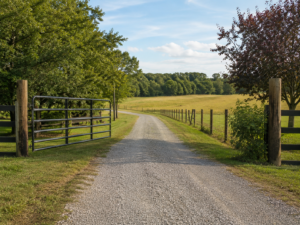
On a working homestead, access affects almost everything. It affects how easily you bring in groceries, feed, hay, lumber, fencing, mulch, compost, tools, animals, firewood, and building supplies. It affects how safely you move during rain, heat, darkness, illness, injury, or old age. It affects whether emergency vehicles, delivery trucks, trailers, tractors, mowers, and wheelbarrows can reach the places they need to reach.
Good access saves steps, time, strength, and frustration. Poor access turns ordinary chores into a daily fight.
Start With the Main Entrance
The main entrance is the first access point on the homestead. It may be a driveway, gate, farm road, gravel lane, shared easement, or simple entry from a county road. Whatever it looks like, it needs to function.
A good entrance should be easy to identify, wide enough for normal vehicles, safe to turn into, and strong enough to handle regular use. If deliveries, trailers, emergency vehicles, or service trucks need to come onto the property, the entrance should be planned with more than a small car in mind.
If there is a gate, think about how it opens, where vehicles wait, and whether someone can safely pull off the road while opening it. A gate that forces a vehicle to sit partly in the road is not ideal. A gate that drags, sags, or requires wrestling every time it is used will become a daily annoyance.
The main entrance does not have to be fancy. It needs to be clear, safe, and dependable.
Driveways and Farm Lanes Need Drainage
A driveway is more than a strip of dirt or gravel. It is a drainage project.
Many driveway problems are water problems. Standing water, ruts, washouts, mud holes, and soft spots often come from poor drainage. If water sits on the drive or runs straight down it like a creek, the surface will not hold up well.
Good driveway planning looks at slope, ditches, culverts, crown, gravel depth, soil type, and where water naturally wants to go. The goal is to move water away from the driving surface instead of letting it destroy the road.
Gravel driveways may need periodic maintenance. Dirt lanes may need grading. Low areas may need culverts or additional rock. Heavy traffic areas may need reinforcement. If the driveway carries feed trucks, propane delivery, construction supplies, firewood, or trailers, it needs to be built for that kind of use.
A driveway that works only in dry weather is not good enough for a working homestead.
Think About Delivery and Emergency Access
Homesteads often require things to be delivered: lumber, appliances, propane, hay, gravel, soil, mulch, livestock panels, feed, furniture, equipment, and sometimes medical supplies. If a truck cannot get close enough, everything has to be carried farther.
Emergency access matters even more. Fire trucks, ambulances, utility vehicles, and repair trucks may need to enter the property quickly. Narrow drives, weak bridges, low tree limbs, tight turns, locked gates, and soft ground can all slow things down.
A good access plan considers:
- Can a large vehicle enter?
- Can it turn around?
- Are gates wide enough?
- Are tree limbs trimmed high enough?
- Can emergency responders find the house?
- Is the driveway visible and marked?
- Is the surface usable after rain?
- Are culverts or bridges strong enough?
This is not about fear. It is about being practical.
Paths Should Match the Work
Not every access route needs to be a driveway. Some routes are walking paths, garden paths, animal chore paths, wheelbarrow paths, mower paths, or equipment paths.
The path should match the work.
A garden path may need to handle wheelbarrows, harvest baskets, hoses, and muddy boots. A path to the chicken coop may need to be safe in the dark. A path to the woodpile may need to handle repeated trips with heavy loads. A path between the house and barn may need to stay usable during rain. A path to animal shelters may need room for feed buckets, bedding, and water hoses.
If a path is too narrow, too steep, too slippery, or too cluttered, chores become harder. If it is planned well, chores flow more easily.
Good materials may include gravel, mulch, stepping stones, pavers, compacted dirt, boards, or mowed grass paths, depending on the use and location. The best path is not always the prettiest path. It is the one that holds up under the work.
Gates Are Access Points, Not Decorations
Gates need to be placed with purpose. A gate should help the work, not interrupt it.
Every gate should answer a question. Who uses this gate? What passes through it? A person? A wheelbarrow? A mower? A tractor? A trailer? Livestock? Feed? Firewood? Garden carts?
A gate for people can be narrow. A gate for equipment needs to be wider. A gate for livestock needs to be secure. A gate used daily needs to open and close easily. A gate used in an emergency needs to be obvious and accessible.
Gate placement matters. A gate in the wrong place can add hundreds of wasted steps over time. A gate in the right place can make chores faster every day.
Also think about latch height, swing direction, mud around the gate, animal pressure, and whether the gate can be opened while carrying something. A beautiful gate that cannot be used easily with a bucket in one hand is not practical homestead infrastructure.
Plan Access Around Water, Feed, and Tools
A lot of homestead access problems come from carrying heavy things too far.
Water, feed, bedding, compost, mulch, firewood, fencing supplies, and tools all create movement patterns. If the feed storage is far from the animals, you will feel it. If the compost pile is awkwardly placed, you may avoid using it. If the hose cannot reach the garden, watering becomes a chore. If tools are stored in the wrong building, simple jobs take longer.
When planning access, follow the work.
- Where does feed arrive?
- Where is it stored?
- Where is it used?
- Where does bedding come in?
- Where does manure go out?
- Where does compost go?
- Where is firewood stacked?
- Where are tools kept?
- Where do hoses need to reach?
Good access connects the work areas of the homestead. It reduces unnecessary carrying, dragging, backtracking, and frustration.
Mud Control Is Infrastructure
Mud is more than a mess. It can be a safety problem, an animal health problem, and a work problem.
High-traffic areas around gates, animal pens, water troughs, barns, coops, driveways, and garden entrances often become muddy first. These areas may need gravel, rock, drainage, mulch, boards, geotextile fabric, improved grading, or relocation.
If an area is muddy all the time, do not just keep walking through it and hating it. Treat it as an infrastructure issue.
Mud control protects people, animals, equipment, and soil. It also makes the homestead feel more manageable. A dry, stable path to the animals can make winter chores or rainy-season chores much easier.
Access Changes With Seasons
A path that works in spring may be overgrown in summer, muddy in winter, and covered in leaves in fall. A shaded lane may stay wet longer. A sunny path may become brutally hot. A low spot may flood after heavy rain. A gate may freeze, swell, sag, or become surrounded by weeds.
Access should be reviewed through the seasons.
Watch where water stands after storms. Notice where you avoid walking. Notice which paths you naturally use. Notice where animals create trails. Notice where vehicles get stuck or where the mower cannot turn easily.
The land will often show you where the real access routes should be.
Safety Matters
Access should be safe, especially in areas used often.
This includes stable footing, clear paths, good lighting where needed, trimmed limbs, visible steps, secure bridges, safe slopes, and paths wide enough for the work. If chores happen after dark, lighting or reflective markers may help. If an elder, child, or injured person uses the area, path stability matters even more.
A homestead should not require people to stumble through holes, climb over clutter, duck under sharp branches, or balance across slick boards to do normal chores.
Safe access is not laziness. It is good design.
Build Main Routes First
It is tempting to make little paths everywhere, but the main routes matter most.
Start with the routes that support daily life:
- Road to house
- House to garden
- House to animals
- House to shop or barn
- House to woodpile
- Feed storage to animals
- Compost to garden
- Driveway to storage areas
- Emergency access routes
Once the main routes work, smaller paths can be added later.
This keeps the homestead from becoming a patchwork of half-finished trails and muddy shortcuts.
Access Is What Makes the Homestead Work
Access may not be exciting, but it affects every part of the homestead. A good driveway brings supplies in. A good path gets you to the garden. A good gate saves steps. A good lane lets equipment reach the work. A good emergency route protects the household. A dry path makes chores easier. A thoughtful layout saves energy every day.
When access is planned well, the whole property works better.
Homestead access is not just about where people walk or where vehicles drive. It is about connecting the systems of the homestead so the work can actually happen.
Build access with daily life in mind. Keep water moving away from roads and paths. Make gates wide enough and easy to use. Place routes where the work naturally flows. Control mud before it becomes a permanent problem. Think about deliveries, emergencies, seasons, animals, gardens, tools, and future projects.
A homestead becomes easier to manage when people, animals, supplies, and equipment can move through it safely and efficiently.