
Garden Troubleshooting
Every garden has days when something looks wrong. Leaves turn yellow, plants wilt, tomatoes get spots, seedlings stop growing, or a perfectly healthy-looking plant suddenly acts like it has given up on life.
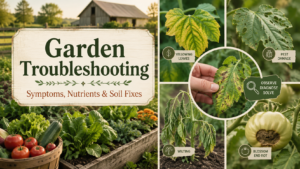
Before you panic, start with the basics. Most garden problems come from one of a few things: water, weather, sunlight, soil, pests, disease, or missing nutrients. The goal of this page is to help you slow down, look closely, and narrow down what is most likely happening.
These charts are meant to be a starting point, not a magic wand. Plants can show the same symptom for more than one reason. Yellow leaves can mean too much water, not enough nitrogen, old leaves naturally dying, root problems, or stress from heat. Wilting can mean dry soil, soaked soil, damaged roots, or afternoon heat. That is why the first step is always to check the whole situation, not just one leaf.
How To Use
These Garden
Troubleshooting Charts
Start with what you can see. Then check the simple things first before adding fertilizer, sprays, or soil amendments.
Don’t trust your memory. Use your phone’s camera and take pictures. This way, you won’t have to try to remember whether it was the tomatoes with the wilted leaves or the beans…or which of the two had yellowing leaves, or if there were brown spots or black spots on the leaves. Take good, clear pictures, then work with the charts.
Step 1: Look at the whole plant
Ask yourself:
- Is the whole plant struggling, or just a few leaves?
- Are the oldest leaves affected first, or the newest growth?
- Are the leaves yellow, brown, curled, spotted, chewed, wilted, or crispy?
- Are flowers dropping?
- Is the plant growing slowly?
- Is fruit damaged, rotting, cracking, or not forming?
If the problem is only on one or two older leaves, it may not be serious. If the whole plant is affected, or the problem is spreading, keep checking.
Step 2: Check the soil moisture
Before you feed anything, check water.
Push your finger into the soil a couple of inches.
- If the soil is dry, the plant may need water.
- If the soil is soggy, the plant may be drowning.
- If the top is dry but underneath is moist, wait before watering again.
- If water runs off instead of soaking in, the soil may be compacted or hydrophobic.
Many nutrient problems look worse when the plant is either too wet or too dry, because stressed roots cannot take up nutrients properly.
Step 3: Check for pests and damage
Look closely at:
- Undersides of leaves
- New growth
- Stems
- Soil surface
- Fruit
- Flowers
Look for bugs, eggs, webbing, sticky residue, holes, ragged edges, tunnels, or droppings. If you see chewing, holes, or sudden missing leaves, use the general plant problem chart first.
Step 4: Check the weather and sunlight
Plants can look dramatic after:
- Heavy rain
- Several cloudy days
- Sudden heat
- Strong afternoon sun
- Cold nights
- High wind
- Transplanting
- A fast change from indoor growing to outdoor sun
If the weather has been extreme, the plant may be stressed rather than sick.
Step 5: Use the general plant problem chart first
The first chart is for the “my plant is doing weird stuff” stage. Use it when you know what you see, but you are not sure what it means.
That chart helps you connect visible symptoms with common causes and simple first steps.
Step 6: Use the nutrient deficiency chart if the problem looks like feeding trouble
If the plant has yellowing, pale growth, purple leaves, weak stems, slow growth, or leaf discoloration without obvious pest damage, then check the nutrient deficiency chart.
Do not automatically add fertilizer just because a leaf is yellow. Make sure water, roots, and soil conditions are not the real problem first.
Step 7: Know when to stop guessing and test your soil
If several plants are struggling in the same bed, or if the same problem keeps happening over and over, it is time to stop guessing.
A soil test is especially helpful when:
- Multiple plants in one bed are stunted or yellow
- The same crop fails in the same area every year
- Fertilizer does not seem to help
- Plants grow lots of leaves but little fruit
- Soil stays hard, crusty, soggy, or dry no matter what you do
- You are starting a new garden bed
- You bought or brought in new soil
- You suspect the pH is wrong
- You need to know what nutrients are actually low or high
Once you have soil test results, use the soil repair chart to decide what to add, what not to add, and how to start improving the bed.
Step 8: Make one change at a time
Do not water, fertilize, spray, prune, lime, compost, and transplant all on the same day unless you already know exactly what is wrong.
Make one sensible change, then watch the plant for a few days.
Good first changes are usually:
- Correct watering
- Removing damaged leaves
- Checking for pests
- Adding mulch
- Improving airflow
- Giving light feeding only when appropriate
- Testing soil before major amendments
Quick Garden Troubleshooting Checklist
Before you treat the plant, check:
- Soil moisture
- Recent weather
- Sun exposure
- Pest damage
- Whether old or new leaves are affected
- Whether one plant or the whole bed is affected
- Whether the plant was recently transplanted
- Whether fertilizer has already been added
- Whether the soil has been tested
Then choose the chart that matches your situation:
Use Chart 1 if you are looking at a visible plant problem and need to narrow it down.
Use Chart 2 if the symptoms look like a nutrient deficiency.
Use Chart 3 if you have soil test results and need to repair the soil.
These charts are easiest to read on a wider screen. If you are using a phone, turn it sideways for the best view.
Chart 1:
My Plant is
Doing Something Weird!
| Problem | What It Might Mean | What To Check | What To Do |
|---|---|---|---|
| Leaves are wilting | Too little water, too much water, heat stress, root damage, or transplant shock | Check soil moisture 2 inches deep. Look at whether the plant perks up in the evening. Check if it was recently transplanted. | Water only if soil is dry. If soil is soggy, let it dry before watering again. Add mulch if heat is the issue. Give transplants a few days to recover. |
| Leaves are turning yellow | Overwatering, low nitrogen, old leaves dying, poor drainage, root stress, or nutrient deficiency | Check if yellowing starts on older leaves or newer growth. Check soil moisture and drainage. | Fix watering first. Remove badly yellow leaves. If older leaves are yellow and plant is pale, feed lightly with balanced fertilizer or compost tea. |
| Lower leaves are yellow but top looks healthy | Normal aging, low nitrogen, or plant putting energy into fruit | Look at the whole plant. Check if only a few bottom leaves are affected. | Remove yellow lower leaves. If the plant is otherwise healthy, do not panic. Feed lightly if the whole plant looks pale. |
| New growth is pale or yellow | Iron deficiency, nitrogen deficiency, high pH, or root problems | Check whether the yellowing is mostly on new leaves. Look for green veins with yellow leaf tissue. | Check soil pH if this keeps happening. Use compost and a gentle balanced fertilizer. Do not overdo amendments without a soil test. |
| Leaves have brown crispy edges | Underwatering, heat stress, wind burn, salt buildup, or potassium deficiency | Check watering pattern, recent heat, and whether fertilizer has been overused. | Water deeply if dry. Mulch. Avoid over-fertilizing. If several plants show the same issue, consider soil testing. |
| Leaves are curling upward | Heat stress, too much sun, inconsistent watering, or herbicide drift | Check weather, recent spraying nearby, and whether leaves look twisted or just curled. | Keep watering consistent. Add mulch. Do not fertilize heavily while stressed. If herbicide drift is suspected, wait and watch new growth. |
| Leaves are curling downward | Overwatering, root stress, disease, or heavy pest pressure | Check soil moisture, roots if possible, and undersides of leaves for pests. | Let soggy soil dry. Improve airflow. Remove badly damaged leaves. Treat pests if found. |
| Holes in leaves | Chewing insects, caterpillars, beetles, slugs, snails, or grasshoppers | Look under leaves, along stems, and around soil surface. Check early morning or evening. | Handpick pests if possible. Remove damaged leaves if severe. Use row cover, traps, or garden-safe treatment based on the pest. |
| Leaves look skeletonized | Beetles, caterpillars, or heavy insect feeding | Check for insects on leaf undersides and nearby plants. | Remove visible pests. Prune worst leaves. Protect healthy growth. Treat only after identifying the pest. |
| Leaves have tiny speckles or stippling | Spider mites, thrips, or sucking insects | Look under leaves for tiny moving dots, webbing, or silvery streaks. | Spray leaves with water to knock pests back. Improve plant health. Use insecticidal soap if needed, especially on undersides. |
| Sticky leaves or shiny residue | Aphids, whiteflies, scale, or other sap-sucking insects | Look for clusters of small insects, especially on new growth and undersides of leaves. | Rinse plant with water. Remove heavily infested tips. Use insecticidal soap if needed. Encourage beneficial insects. |
| White powder on leaves | Powdery mildew | Check if leaves have a dusty white coating, especially during humid weather or poor airflow. | Remove worst leaves. Improve airflow. Water at soil level. Avoid crowding. Use an appropriate fungicide only if needed. |
| Black spots on leaves | Fungal or bacterial leaf spot, splashback from soil, or poor airflow | Check if spots spread after rain or overhead watering. Look at lower leaves first. | Remove affected leaves. Mulch to reduce soil splash. Water at the base. Improve spacing and airflow. |
| Leaves are brown or black and mushy | Rot, disease, frost damage, or too much moisture | Check soil moisture, recent cold, and whether stems are soft. | Remove rotten parts. Let soil dry if too wet. Improve drainage. Pull the plant if rot reaches the main stem. |
| Plant is stunted | Poor soil, compacted soil, low nutrients, root damage, too little sun, or watering problems | Compare with nearby plants. Check soil condition, roots, sunlight, and watering. | Loosen compacted soil around future plantings. Add compost. Correct watering. Soil test if the whole bed is struggling. |
| Plant has lots of leaves but few flowers | Too much nitrogen, not enough sun, immature plant, or wrong season | Check sun hours and fertilizer type. Look at whether the plant is still young. | Stop high-nitrogen feeding. Give more sun if possible. Be patient if the plant is still growing. |
| Flowers are dropping | Heat stress, poor pollination, inconsistent watering, or plant stress | Check temperature, pollinator activity, and watering consistency. | Keep watering even. Mulch. Avoid heavy fertilizer. For tomatoes and peppers, blossom drop often improves when weather settles. |
| Flowers form but no fruit | Poor pollination, heat, lack of pollinators, or too much nitrogen | Check if flowers are being visited by bees. Check if plant is flowering during extreme heat. | Encourage pollinators. Hand-pollinate squash or cucumbers if needed. Avoid overfeeding nitrogen. |
| Fruit is small or slow to grow | Water stress, nutrient shortage, crowding, poor pollination, or too little sun | Check spacing, sunlight, water, and whether the plant is carrying too much fruit. | Water consistently. Feed lightly if plant looks hungry. Thin crowded plants if possible. |
| Tomatoes or peppers have black sunken bottoms | Blossom end rot, usually from calcium uptake trouble caused by inconsistent watering | Check watering pattern. Look for dry/wet swings. | Water evenly. Mulch. Do not over-fertilize with nitrogen. Remove damaged fruit. Calcium may be present but unavailable due to water stress. |
| Fruit is cracking | Inconsistent watering, heavy rain after dry soil, or rapid growth | Check if cracking happened after rain or sudden watering. | Keep soil moisture steady. Mulch. Harvest ripe fruit before heavy rain when possible. |
| Fruit has sunscald | Too much direct sun on exposed fruit, often after pruning or leaf loss | Look for pale, papery, or burned patches on fruit. | Keep enough foliage to shade fruit. Avoid heavy pruning in hot weather. Harvest damaged fruit if needed. |
| Seedlings are falling over at soil line | Damping off disease, too much moisture, poor airflow, or contaminated starting mix | Check if stems are pinched, dark, or mushy near soil line. | Remove affected seedlings. Improve airflow. Avoid overwatering. Start over with clean mix if needed. |
| Plant suddenly dies | Root damage, stem rot, bacterial wilt, squash vine borer, severe drought, or animal damage | Check stem base, roots, soil moisture, and signs of boring or chewing. | Pull and inspect the plant. Remove diseased plants from the garden. Do not compost diseased material. Replant if season allows. |
| Leaves look twisted or deformed | Herbicide drift, virus, aphids, mites, or environmental stress | Check for nearby spraying, pests, and whether new growth is distorted. | Do not eat questionable foliage. Remove badly affected growth. Watch new growth. Pull plant if symptoms worsen or spread. |
| Plant looks pale all over | Low nitrogen, poor soil, too little sun, overwatering, or root stress | Check color of entire plant, soil moisture, drainage, and sunlight. | Correct watering. Add compost or light balanced fertilizer. Soil test if multiple plants are pale. |
| Plant is leaning or falling over | Weak stems, wind damage, shallow roots, heavy fruit, or lack of support | Check stem strength, soil firmness, and fruit load. | Stake or cage plant. Firm soil gently around roots. Prune only if needed. Harvest heavy fruit. |
| Leaves are getting scorched after transplanting | Sunburn or transplant shock | Check if plant was hardened off before planting. Look for white, tan, or crispy patches. | Give temporary shade if needed. Keep watered but not soggy. New growth should improve. |
| Plant looks healthy but is not growing | Cool soil, transplant shock, low nutrients, compacted soil, or not enough sun | Check soil temperature, root space, and sunlight. | Give it time if weather is cool. Add compost. Avoid overwatering. Fertilize lightly only if needed. |
| Mushrooms or mold on soil surface | Moist organic matter, poor airflow, or consistently damp soil | Check if soil is staying wet too long. | Improve airflow. Let top of soil dry slightly. Remove surface mold if desired. Usually not serious unless plants are struggling. |
| Green algae on soil surface | Soil staying wet, low airflow, or too much surface moisture | Check watering frequency and drainage. | Water less often. Loosen surface gently. Improve airflow and avoid keeping soil constantly wet. |
| Ants around plants | Dry soil, aphids, or ants nesting in loose soil | Check for aphids and sticky residue. Check if soil is very dry. | Treat aphids if present. Water deeply if soil is dry. Disturb ant nests if they are damaging roots. |
| Leaves are missing overnight | Deer, rabbits, caterpillars, slugs, snails, or grasshoppers | Look for tracks, droppings, slime trails, or clean-cut stems. | Use fencing, row cover, handpicking, or pest-specific control. Identify the culprit before treating. |
Chart 2: Nutrient Deficiency
| Signs & Symptoms | Nutrient Needed | Treatment |
|---|---|---|
| Older leaves turn yellow first while newer growth stays greener. | Nitrogen | Add compost, aged manure, fish emulsion, blood meal, or a balanced organic fertilizer. Avoid overfeeding, especially on fruiting plants. |
| Plant looks pale green all over and growth is slow. | Nitrogen or general fertility | Feed lightly with compost, compost tea, fish emulsion, or a balanced fertilizer. Check watering first because wet roots can cause pale growth too. |
| Leaves or stems look purple, especially on young plants. | Phosphorus | Check soil temperature first. Cold soil can keep plants from using phosphorus. If soil test shows low phosphorus, add bone meal, rock phosphate, or balanced fertilizer. |
| Plants are slow to flower, root poorly, or stay small even with enough water. | Phosphorus | Add compost and use a soil test before adding strong phosphorus amendments. Avoid overdoing phosphorus because too much can interfere with other nutrients. |
| Leaf edges turn brown, dry, or scorched, especially on older leaves. | Potassium | Add compost, kelp meal, greensand, langbeinite, or a balanced fertilizer if soil test supports it. Keep watering even. |
| Plants have weak stems, poor disease resistance, or poor fruit quality. | Potassium | Improve soil with compost and use a potassium-containing fertilizer if needed. Avoid excess nitrogen, which can make plants leafy but weak. |
| Older leaves turn yellow between the veins while the veins stay greener. | Magnesium | Use Epsom salt only if magnesium deficiency is likely or soil test shows low magnesium. Compost and balanced soil care are safer first steps. |
| New leaves turn yellow between the veins while the veins stay green. | Iron | Check soil pH. Iron may be present but unavailable if pH is too high. Add compost and correct pH based on soil test results. |
| Newest leaves are pale, yellow, or almost white. | Iron or sulfur | Check pH and drainage. Avoid adding random amendments until you know whether the issue is nutrient shortage, high pH, or root stress. |
| Tomatoes, peppers, squash, or melons have black, sunken spots on the blossom end of the fruit. | Calcium uptake problem | Keep soil moisture even. Mulch well. Avoid heavy nitrogen feeding. Calcium may already be in the soil but unavailable because of inconsistent watering. |
| New leaves are twisted, distorted, or growing poorly. | Calcium or boron, but also possible herbicide, pest, or virus issue | Check for pests and herbicide exposure first. Do not add boron without a soil test because too much can harm plants. |
| Leaves are small, growth is slow, and plants look generally weak. | Zinc or general soil imbalance | Use compost and soil testing. Zinc problems are often tied to pH or excess phosphorus, not simply lack of zinc. |
| Plants have yellowing, poor growth, and weak color even after nitrogen feeding. | Sulfur | Add compost or use a balanced fertilizer that includes sulfur. Soil test before using stronger sulfur amendments. |
| Leaves yellow between veins, but symptoms do not match one clear nutrient problem. | Possible micronutrient imbalance | Check pH, soil moisture, drainage, and recent fertilizer use. Use a soil test before adding individual micronutrients. |
| Plants grow lots of leaves but few flowers or fruit. | Too much nitrogen, not necessarily a deficiency | Stop high-nitrogen fertilizer. Use compost instead of strong feeding. Give plants enough sun and time to shift into flowering. |
| Several different crops in the same bed are yellow, stunted, or weak. | Overall soil fertility, pH, drainage, or organic matter problem | Do a soil test. Add compost and organic matter. Fix drainage and watering before applying multiple fertilizers. |
When To Stop Guessing
and Test Your Soil
If one plant looks bad, start with the troubleshooting charts above. But if several plants in the same bed are struggling, or the same problem keeps coming back, it is time to stop guessing and test the soil.
A soil test is especially helpful when plants are yellow, stunted, weak, slow to fruit, or failing even though watering and sunlight seem right. It is also smart to test before adding lime, sulfur, phosphorus, or strong fertilizers, because adding the wrong thing can make the problem worse.
There are two common ways to test your soil. You can use a soil test kit purchased online or from a garden center, with the understanding that it may not be as complete as a professional soil test.
For a more detailed option, contact your local Cooperative Extension office. Many Extension offices either offer soil testing through their state land-grant university or can tell you where to send a sample.
You can find your state Extension service through the National Extension Directory, the USDA/NIFA Land-Grant University Directory, or your state’s Cooperative Extension website.
Chart 3:
Soil Test Results and How To Repair Your Soil
| Nutrient / Soil Factor | If Test Shows Low | What To Do If Low | If Test Shows High | What To Do If High |
|---|---|---|---|---|
| Copper: | Low | Add copper only if your soil test recommends it. Use small amounts carefully because copper can build up in soil. | High | Do not add copper. Add organic matter and avoid copper-based sprays unless truly needed. |
| Nitrogen: | Low | Add compost, aged manure, blood meal, fish emulsion, or a balanced fertilizer. Recheck plant growth before adding more. | High | Stop high-nitrogen fertilizers. Add carbon-rich organic matter such as leaves, straw, or mulch and let the soil balance over time. |
| Phosphorus: | Low | Add bone meal, rock phosphate, compost, or a balanced fertilizer only as recommended by the soil test. | High | Do not add phosphorus. Avoid bone meal and bloom boosters. Add organic matter and focus on balanced soil biology. |
| Potassium: | Low | Add compost, kelp meal, greensand, langbeinite, or another potassium source recommended by your soil test. | High | Do not add potassium fertilizers. Avoid overusing wood ash. Add compost and monitor magnesium and calcium balance. |
| Calcium: | Low | Add gypsum if pH is already acceptable, or lime if both calcium and pH are low. Follow soil test recommendations. | High | Do not add lime, gypsum, or other calcium sources. Watch for nutrient lockout and balance soil with organic matter. |
| Magnesium: | Low | Use Epsom salt or dolomitic lime only if the soil test supports it. Choose dolomitic lime only when pH also needs raising. | High | Do not add Epsom salt or dolomitic lime. High magnesium can tighten soil, so add organic matter and avoid extra magnesium sources. |
| Sulfur: | Low | Add compost, gypsum, or a balanced fertilizer that includes sulfur if your soil test recommends it. | High | Do not add sulfur amendments. Avoid acidifying products unless your soil test specifically calls for them. |
| Iron: | Low | Check soil pH first. Iron may be present but unavailable if pH is too high. Add compost and correct pH if needed. | High | Do not add iron products. Improve drainage and organic matter, and avoid unnecessary micronutrient fertilizers. |
| Zinc: | Low | Add zinc only if your soil test recommends it. Micronutrients are needed in very small amounts. | High | Do not add zinc. Avoid extra micronutrient blends and add organic matter to support long-term balance. |
| Boron: | Low | Add boron only if your soil test specifically recommends it. Use extreme care because the safe range is narrow. | High | Do not add boron. Avoid borax or micronutrient mixes containing boron. Too much boron can harm plants. |
| Manganese: | Low | Check pH first. Add manganese only if recommended by your soil test, and avoid guessing with micronutrients. | High | Do not add manganese. Improve drainage and organic matter. High manganese is more likely in acidic or poorly drained soils. |
| Soil pH: | Low / Acidic | Raise pH with lime if your soil test recommends it. Use dolomitic lime only if magnesium is also low. | High / Alkaline | Lowering pH takes time. Add organic matter and use sulfur only if your soil test recommends it. |
| Organic Matter: | Low | Add compost, aged manure, leaf mold, mulch, cover crops, and other organic materials over time. | High | Usually not a problem, but avoid overloading beds with rich compost or manure if nutrients are also testing high. |