Homestead Food Storage: Pantry Space, Freezers, Canning Shelves, and Long-Term Food Security
Growing food is only part of homesteading. The other half is keeping that food useful after the harvest. A garden full of tomatoes, a freezer full of meat, a shelf full of home-canned beans, and a pantry stocked with staples all require one thing many people forget to plan for: food storage.
Food storage is infrastructure. It is not just a few shelves in the kitchen or a box of extra groceries in a closet. On a working homestead, food storage supports the garden, the livestock, the kitchen, the budget, and emergency preparedness. It helps turn seasonal abundance into year-round meals.
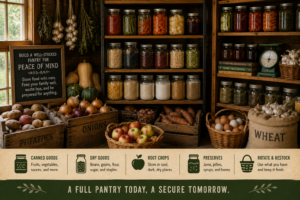
A homestead without food storage is always racing the clock. Vegetables spoil. Freezers fill too fast. Canning jars have nowhere to go. Bulk flour attracts pests. Potatoes sprout too early. Onions rot. Meat gets buried at the bottom of a freezer and forgotten. A good food storage system prevents waste and makes the whole homestead work better.
Food storage does not have to be perfect or fancy. It needs to be clean, dry, organized, protected, and matched to the way your household actually eats.
Start With the Food You Actually Use
Food storage should begin in the kitchen, not at the store.
Before building shelves or buying bulk food, look at what your household eats every week. The best pantry is not the one full of random emergency food nobody likes. It is the one that supports real meals.
A practical homestead pantry may include:
- Flour
- Sugar
- Salt
- Rice
- Beans
- Pasta
- Oats
- Cornmeal
- Baking supplies
- Canned vegetables
- Tomato products
- Broth
- Spices
- Oil
- Vinegar
- Coffee
- Tea
- Dry milk
- Home-canned foods
- Dehydrated foods
- Convenience ingredients used on busy days
If your family eats beans every week, storing beans makes sense. If nobody likes lentils, a fifty-pound bag of lentils is not preparedness. It is clutter.
The same rule applies to garden harvests. Preserve what you will eat. Store what you know how to cook. Grow and preserve food that fits your real kitchen life.
Plan Different Storage Zones
Not all food belongs in the same place. A homestead may need several food storage zones.
Kitchen Pantry
The kitchen pantry holds food used often. It should be easy to reach and easy to rotate.
Deep Pantry
The deep pantry holds extra dry goods, canned goods, and backup supplies. This may be in a closet, spare room, utility room, basement, or dedicated pantry space.
Canning Shelf
The canning shelf holds home-canned jars. It should be sturdy, cool, dry, and protected from direct sunlight.
Freezer Area
The freezer area holds meat, vegetables, fruit, casseroles, broth, butter, and other frozen foods.
Root Storage Area
The root storage area holds crops like potatoes, sweet potatoes, onions, garlic, winter squash, and apples, depending on what conditions are available.
Working Kitchen Area
The working kitchen area holds foods currently being processed, cooled, canned, dehydrated, or packaged.
Trying to force all of this into one cabinet usually causes chaos. Food storage works better when each type of food has a proper place.
Pantry Shelving Must Be Strong
Food is heavy. Canning jars are very heavy. A full shelf of quart jars weighs far more than people expect.
Pantry shelves should be strong, level, and secured when needed. Thin decorative shelving may work for dishes or baskets, but it may not be safe for rows of canned food. Deep shelves can hold more, but they also make it easier to lose food in the back. Shallow shelves make rotation easier.
For home-canned jars, sturdy shelves are not optional. Jars should not be stacked in unstable towers or stored where they can fall. If shelves are tall, consider whether jars are easy to see, reach, and inspect.
A good canning shelf should make it simple to see what is available. Green beans, tomatoes, broth, jams, soups, meats, beans, sauces, and pickles should not disappear into mystery storage.
Protect Food From Heat, Light, Moisture, and Pests
Food storage has enemies:
- Heat
- Light
- Moisture
- Pests
- Time
Heat shortens storage life. Direct sunlight can damage food quality. Moisture can lead to mold, rust, spoilage, and ruined dry goods. Pests can destroy flour, rice, beans, pasta, oats, dried fruit, herbs, and animal feed if storage is careless.
A good storage space should be cool, dry, dark, and clean. That does not mean every homestead must have a perfect basement or root cellar. It means choosing the best available space and improving it where possible.
Dry goods may need sealed containers, buckets, jars, bins, or food-safe storage with tight lids. Canned goods should be kept away from extreme heat and freezing. Home-canned jars should be stored without rings after sealing so failed seals are easier to notice. Freezer food should be packaged to prevent freezer burn and labeled clearly.
Pest control begins with clean storage. Spilled grain, flour dust, open bags, cardboard clutter, and forgotten food invite trouble.
Freezers Need a System
Freezers are one of the most useful food storage tools on a homestead, but they can become black holes.
A freezer system should answer three questions:
- What is in there?
- Where is it?
- How old is it?
Without a system, food gets buried, forgotten, freezer burned, or bought again unnecessarily.
Chest freezers often need baskets, bins, dividers, or sections. Upright freezers are easier to see into but may hold less large or bulky food. A freezer inventory can be kept on paper, a clipboard, a whiteboard, or a spreadsheet. The method does not matter as much as actually using it.
Label every package with the food name and date. “Soup” is not enough if you make five kinds of soup. “Tomato basil soup, Sept 2026” is much more useful.
If the freezer stores meat, consider organizing by type:
- Beef
- Pork
- Chicken
- Fish, if used
- Broth
- Vegetables
- Fruit
- Ready meals
- Baking supplies
If it stores garden produce, group similar items together.
A full freezer represents money, labor, food, time and even love. It deserves a plan.
Home-Canned Food Needs Order
Canning is one of the most valuable food preservation methods on the homestead, but only if the finished jars are stored safely and used.
Home-canned food should be labeled with contents and date. If a recipe variation matters, include that too. For example, “Ranch beans,” “plain pinto beans,” and “chili beans” should not all become mystery jars.
Store jars in a cool, dark, dry place. Check seals before use. Do not use jars with failed seals, mold, bubbling, off smells, spurting liquid, or anything that seems wrong.
Rotation matters. Use older jars first. Put newer jars behind older jars. Keep like foods together. If you preserve a lot, consider keeping a tally of how many jars were made and how many remain.
A canning shelf is not just storage. It is part of the household food plan.
Root Crops and Winter Storage
Some foods store best outside the refrigerator, freezer, or canning shelf.
Potatoes, sweet potatoes, onions, garlic, winter squash, apples, and some root crops may store for weeks or months if cured and kept in the right conditions. The challenge is that different crops need different conditions.
- Onions and garlic usually need dry storage with good airflow.
- Potatoes need dark storage and should not be kept in warm, bright areas.
- Winter squash needs curing and a dry location.
- Sweet potatoes need curing and warmer storage than regular potatoes.
- Apples may need cool storage and should be monitored for spoilage.
One rotting item can affect others nearby. Stored produce should be checked often.
Even without a traditional root cellar, many homesteads can create better storage by using the coolest safe part of the house, a pantry room, an insulated closet, a basement area, a protected outbuilding, or bins designed for airflow.
The goal is not perfection. The goal is less waste and longer usefulness.
Short-Term, Seasonal, and Long-Term Storage
Food storage works best when divided by time.
Short-Term Storage
Short-term storage is for food used daily or weekly. This is the working pantry and refrigerator.
Seasonal Storage
Seasonal storage holds harvests, home-canned food, frozen produce, bulk staples, and foods meant to carry the household from one season into the next.
Long-Term Storage
Long-term storage holds backup staples and emergency food. This may include grains, beans, rice, salt, sugar, dehydrated foods, freeze-dried foods, canned goods, and shelf-stable basics.
The mistake is mixing all three together so nothing is clear. Daily-use food should be easy to reach. Seasonal food should be organized and rotated. Long-term food should be protected and checked.
Preparedness does not mean hiding food until it expires. A
strong pantry is used, rotated, and refreshed.
Storage Should Match Preservation Methods
Different preservation methods require different storage.
- Canning needs shelves and jar storage.
- Freezing needs freezer space and backup power planning.
- Dehydrating needs airtight containers and dry storage.
- Fermenting may need crocks, jars, cool storage, or refrigerator space.
- Root cellaring needs temperature and humidity control.
- Bulk buying needs containers and pest protection.
Before adding a new preservation method, think about where the finished food will go.
It is easy to dehydrate a large batch of herbs or apples. It is harder to keep them crisp and protected if there is no container system. It is easy to can dozens of jars of tomatoes. It is harder to store them safely without sturdy shelves.
Preservation and storage should be planned together.
Keep an Inventory
A food storage inventory does not have to be complicated.
It can be a notebook, spreadsheet, clipboard, whiteboard, or printed pantry sheet. The point is to know what you have, what you need, and what should be used soon.
A useful inventory may track:
- Canned goods
- Home-canned jars
- Freezer contents
- Bulk dry goods
- Baking supplies
- Spices and herbs
- Long-term storage
- Animal feed if stored nearby
- Empty jars and lids
- Preservation supplies
Inventory prevents overbuying one thing while running out of another. It also helps with meal planning, grocery orders, garden planning, and canning goals.
If the household eats twelve jars of green beans a month, that information matters when planning the next garden. If the freezer is full of squash nobody wants, that matters too.
Food Storage Is Part of Food Security
Food security is not only about growing more food. It is about keeping food available, safe, organized, and usable.
A homestead pantry can protect the household from high grocery prices, storms, illness, supply problems, busy seasons, unexpected company, and days when leaving the property is difficult. It can make meal planning easier. It can reduce waste. It can help the garden matter more because the harvest has somewhere to go.
Start small if needed. Add one strong shelf. Organize one freezer. Label jars clearly. Create one pantry inventory. Store a little more of what the family already eats. Improve pest protection. Make space for the next harvest before it arrives.
Food storage is not a single project. It is an ongoing system.
A homestead becomes stronger when the pantry, freezer, canning shelves, and stored harvest all work together. The goal is not to hoard food. The goal is to build a steady, useful food supply that supports the household through ordinary days and difficult ones.